Let's cut to the chase. If you have a job that offers a 401(k), 403(b), or similar plan, you're holding the single most powerful tool for building retirement wealth that most people will ever get. But here's the uncomfortable truth I've seen after years in finance: most people treat it like a black box. They set a contribution percentage once and forget it, vaguely hoping it'll work out. That's a massive, costly mistake. A defined contribution plan shifts the responsibility—and the opportunity—from your employer to you. Understanding how to wield this tool is the difference between retiring with confidence and scrambling to make ends meet.
What You'll Learn in This Guide
What Is a Defined Contribution Plan, Really?
Forget the textbook definition for a second. In practical terms, a defined contribution plan is a retirement savings account that you fund, often with help from your employer. The "defined contribution" part means the amount put in is fixed or known (your paycheck deduction, your employer's match). What's not defined is the final outcome. The ultimate value of your account when you retire depends entirely on how much you contribute and, critically, how those contributions are invested and grow over time.
This is the fundamental shift from the old pension model (defined benefit plan). Your company doesn't promise you a specific monthly check at 65. Instead, they provide the structure—the account—and sometimes a matching contribution. The investment performance risk and the longevity risk (outliving your savings) are now on your shoulders. That sounds scary, but it also means you have direct control and ownership. If you change jobs, the money is yours to take with you.
The Core Idea: It's a personal investment account for retirement, funded by you and possibly your employer. The end result is a direct reflection of your contributions and investment choices.
The 401(k) Deep Dive: How It Actually Works
The 401(k) is the heavyweight champion of defined contribution plans in the private sector. Let's walk through it step-by-step, because the mechanics matter.
Money In: Contributions and the Magical Match
You elect to have a percentage of your pre-tax salary deducted from each paycheck and sent to your 401(k) account. This is your employee deferral. For 2024, the IRS limit is $23,000 ($30,500 if you're 50 or older).
Now, the best part for many: the employer match. This is free money, but the formula varies. A common one is "50% match on the first 6% of salary you contribute." Let's make this concrete with a case study.
Case Study: Alex vs. Sam
Alex and Sam both earn $70,000. Their company offers a 50% match on the first 6%.
Alex contributes 6% of her salary ($4,200). The company adds 50% of that, or $2,100. Total annual contribution: $6,300.
Sam is cautious and only contributes 3% ($2,100). The company matches 50% of that, but only up to his 3% contribution, giving him $1,050. Total: $3,150.
By not contributing enough to get the full match, Sam left $1,050 of free money on the table. Over 30 years, assuming a 7% return, that single year's missed match could have grown to over $8,000. This is the most expensive mistake you can make.
Money Growing: The Investment Menu
This is where people's eyes glaze over, and it's exactly where you need to pay attention. Your contributions don't just sit as cash. You must choose how to invest them from a menu of options provided by the plan, typically mutual funds or target-date funds.
I've reviewed hundreds of these menus. A common, subtle error is choosing funds based on past one-year performance—the shiny "top performer" list they sometimes show you. That's often a trap. The fund that shot the lights out last year might be poised for a correction. Instead, look for broad, low-cost index funds that track the entire market (like an S&P 500 index fund). Their expense ratios (the annual fee) are your silent enemy. A 1% fee might not sound like much, but over a career, it can consume a quarter of your potential balance. The U.S. Department of Labor has resources on understanding these fees.
Beyond the 401(k): Other Types of Plans
While the 401(k) gets all the press, other defined contribution plans serve specific groups. The principles are identical, but the names and rules differ.
| Plan Type | Who It's For | Key Notes |
|---|---|---|
| 403(b) | Employees of public schools, certain nonprofits, churches | Very similar to a 401(k). Investment options may include annuities. Contribution limits are the same. |
| 457(b) | State and local government employees, some nonprofit workers | A huge perk: no early withdrawal penalty if you separate from service, even before age 59½. |
| TSP (Thrift Savings Plan) | Federal government employees and uniformed services | Widely praised for its extremely low-cost investment funds (the "G", "F", "C", "S", "I" funds). |
| SIMPLE IRA | Small businesses (under 100 employees) | Easier for employers to set up. Employer contributions are mandatory (either a match or a fixed %). |
If you work for a university or hospital, you might even have both a 403(b) and a 457(b), effectively allowing you to double the annual contribution limit. It's a powerful savings accelerator few outside those fields know about.
How to Maximize Your Savings (Beyond Just Contributing)
Hitting the employer match is Lesson One. To truly build wealth, you need a strategy.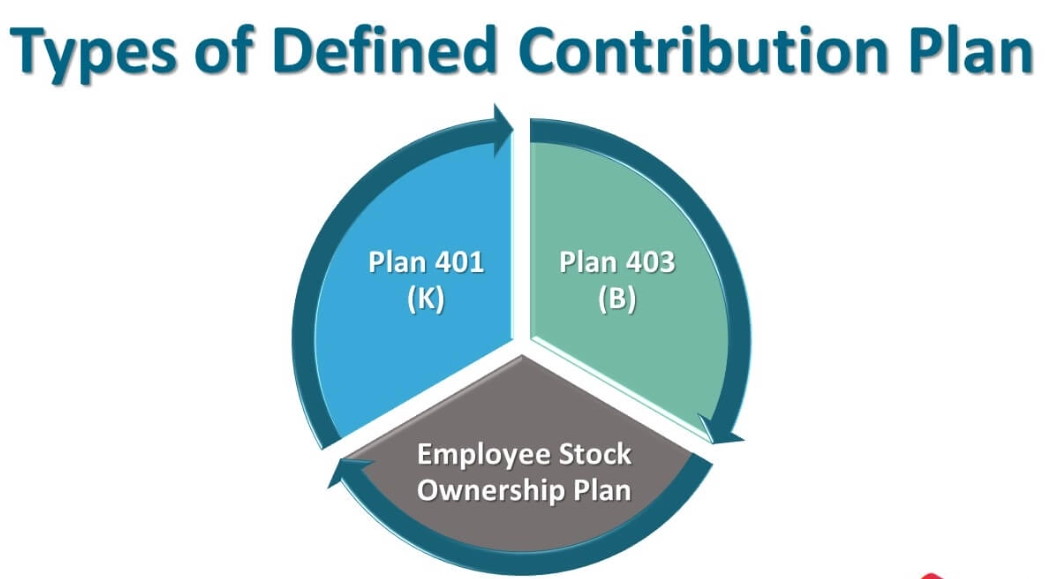
First, increase your contribution rate automatically. Most plans let you set annual auto-increases of 1%. Do it every time you get a raise. You won't feel the pinch, and your savings rate climbs steadily.
Second, understand asset allocation, not stock picking. You don't need to find the next Apple. You need a balanced mix of stocks (for growth) and bonds (for stability) that fits your age and risk tolerance. A 30-year-old might have 90% in stocks; a 55-year-old might shift to 60%. A target-date fund does this automatically for you—just pick the one closest to your expected retirement year. It's a fantastic "set it and forget it" option for most people, though sometimes the fees are a bit higher than building your own mix.
Third, never cash out when you change jobs. The temptation is real. You get a check for $20,000 and think about a car or debt. Terrible idea. You'll pay income tax plus a 10% early withdrawal penalty. That $20,000 could be $150,000 in 30 years. Instead, do a direct rollover into your new employer's plan or an IRA. The money stays invested and tax-deferred.
The 3 Most Common (and Costly) Mistakes
I've sat across from too many people nearing retirement who made these errors decades ago. Don't be them.
1. The Under-Contribution: We covered the match. But even beyond that, contributing just 3-5% is rarely enough. Aim for 15% of your income total (including the match) as a long-term goal. Start where you can and ramp up.
2. The Overly Cautious Investor: Keeping all your money in a "stable value" or money market fund inside your 401(k) feels safe. Over 20 or 30 years, it's a guarantee that you'll lose to inflation. Your purchasing power erodes. You need growth, which means accepting some short-term volatility for long-term gains.
3. The Loan Trap: Many plans allow you to borrow against your balance. It seems harmless—you're paying interest back to yourself. But the money you borrow stops growing. If you leave your job, the loan often becomes due immediately, turning into a taxable distribution if you can't pay. It's a major setback to your compounding growth engine.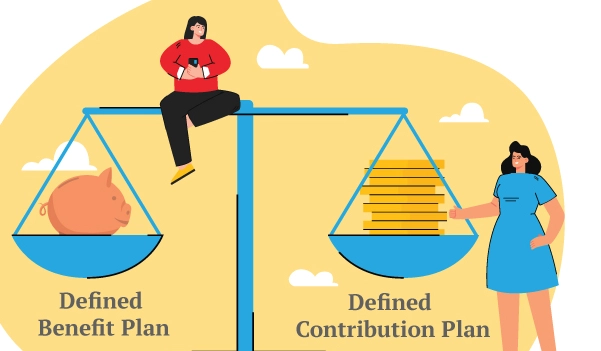
Your Tough Questions Answered
Look, managing a defined contribution plan isn't about being a Wall Street genius. It's about consistency, avoiding big errors, and leveraging the structure that's already in place. Start by logging into your account today. Check your contribution rate. See if you're getting the full match. Review the fees on your investments. These small, informed actions, repeated over decades, are what build genuine financial independence. The plan is just a vessel. You're the captain.
Reader Comments