Let's talk about Exchange Traded Funds, or ETFs. If you've ever felt overwhelmed trying to pick individual stocks or confused by mutual fund fees, you're not alone. I felt the same way a decade ago. ETFs changed the game for me, and they can for you too. They're not a magic bullet, but they're arguably the most powerful tool built for everyday investors in the last 30 years. Think of them as a basket of investments—stocks, bonds, commodities—that trades on an exchange like a single stock. You get instant diversification without needing a fortune to start.
What You'll Find in This Guide
What Exactly Are ETFs and How Do They Work?
An ETF is a fund that holds a collection of assets. Its primary job is to track something—an index like the S&P 500, a sector like technology, a commodity like gold, or even a specific investment strategy. The key mechanic is the "creation and redemption" process handled by large financial institutions called Authorized Participants (APs). This process is what keeps the ETF's market price extremely close to the value of its underlying assets (its Net Asset Value or NAV).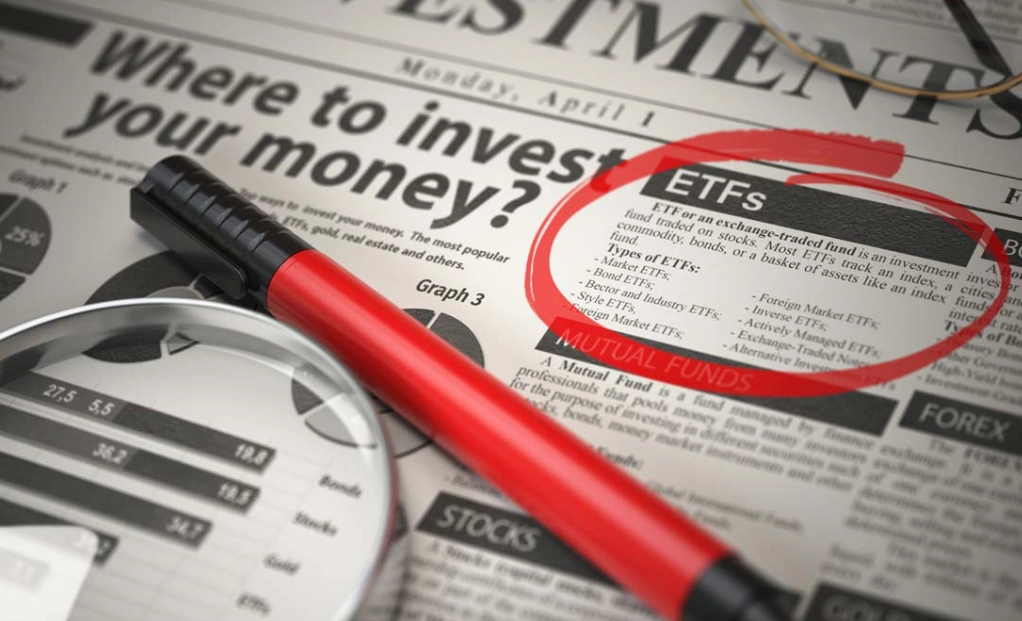
Here's the part most articles gloss over: this creation/redemption mechanism is why ETFs are so tax-efficient compared to traditional mutual funds. When you sell your mutual fund shares, the fund manager might have to sell underlying holdings to pay you, potentially triggering capital gains taxes for all remaining shareholders. With an ETF, redemptions typically happen "in-kind"—APs hand over a basket of the underlying stocks to the issuer in exchange for ETF shares to destroy. No massive stock sale, no taxable event for you.
You buy and sell ETF shares through your brokerage account during market hours, just like a stock. You see the price move in real-time. You can place limit orders, stop-loss orders, and even buy on margin (though I don't recommend that for beginners). This liquidity and flexibility is a huge advantage.
The Real Pros and Cons of ETF Investing
Let's cut through the hype. ETFs are fantastic, but they're not perfect for every single situation.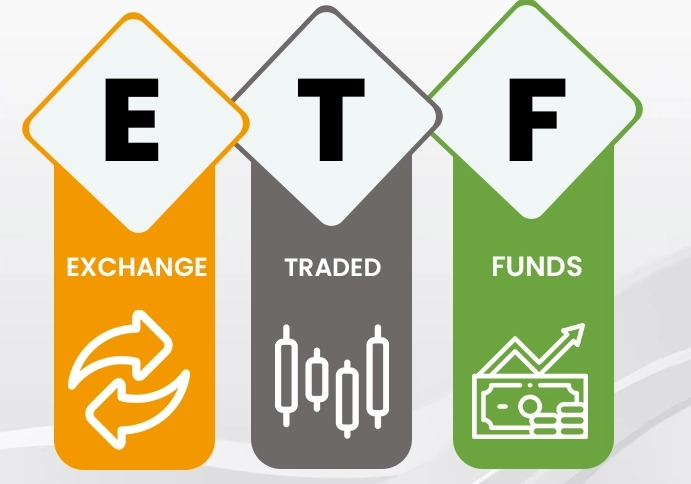
- Diversification in One Click: Buying a single share of a total stock market ETF gives you ownership in thousands of companies. It's the ultimate "don't put all your eggs in one basket" move.
- Low Costs: Expense ratios for major index ETFs are incredibly low, often below 0.10% per year. Vanguard's VTI (Total Stock Market ETF) charges 0.03%. That's $3 per year on a $10,000 investment. Actively managed mutual funds often charge 0.50% to 1.00% or more.
- Transparency: You can see exactly what's inside an ETF every single day. Most providers publish the full holdings list daily.
- Tax Efficiency: As explained above, the in-kind creation/redemption process minimizes capital gains distributions.
- Trading Flexibility: Trade anytime during market hours at a known price.
Now, the not-so-good parts that advisors sometimes downplay.
The Downsides & Hidden Nuances (The Cons):
First, commissions are mostly gone, but not entirely. Most major brokerages offer zero-commission trading on their own platform's list of ETFs. Buy a non-NTF (No Transaction Fee) ETF from another provider at a different broker, and you might still pay a fee. Always check.
Second, the "bid-ask spread." This is the difference between the buying price (ask) and selling price (bid). For huge, liquid ETFs like SPY (SPDR S&P 500 ETF), it's a penny. For a niche ETF tracking a small market, it can be much wider. That spread is an immediate, hidden cost when you trade. Stick to high-volume ETFs to minimize this.
Third, and this is critical, you can lose money. An ETF tracking the S&P 500 will go down when the market crashes. Diversification reduces company-specific risk, not market risk. Don't confuse the tool with a guarantee.
Finally, the paradox of choice. There are over 3,000 ETFs in the U.S. alone. You can now bet on incredibly specific themes—cloud computing, genomics, video gaming. This can lead to performance-chasing and building a overly complex, inefficient portfolio. More isn't always better.
How to Choose the Right ETF: A Practical Framework
With thousands of options, how do you pick? Don't just go for the one with the coolest name. Use this checklist. I use it myself.
1. What's the Investment Objective? Be brutally honest. Are you seeking broad market growth (a total market ETF), income (a bond ETF), or speculating on a specific trend (a thematic ETF)? Your goal dictates the category.
2. Check the Underlying Index. What exactly is the ETF tracking? Two "technology" ETFs might track completely different indexes with different holdings and performance. Read the fund's summary prospectus.
3. The Expense Ratio is King. In the world of index-tracking ETFs, cost is the most reliable predictor of net performance over time. All else being equal, choose the cheaper fund. Compare these popular S&P 500 ETFs:
| ETF Ticker | ETF Name | Expense Ratio | Notes |
|---|---|---|---|
| IVV | iShares Core S&P 500 ETF | 0.03% | Massive, liquid, ultra-low cost. |
| VOO | Vanguard S&P 500 ETF | 0.03% | Vanguard's version, equally excellent. |
| SPY | SPDR S&P 500 ETF Trust | 0.0945% | The original, but higher cost. Very high volume for active traders. |
4. Look at Assets Under Management (AUM) and Trading Volume. Generally, higher AUM (say, over $100 million) and higher average daily volume mean better liquidity and tighter bid-ask spreads. It also suggests the fund is less likely to be shut down.
5. Dig into the Holdings. Don't just trust the label. A "U.S. Large-Cap Growth" ETF might have 30% of its money in just five tech stocks. Is that the concentration you want? Understand what you actually own.
6. Consider the Provider. Major firms like Vanguard, iShares (BlackRock), and State Street SPDR have scale, experience, and a track record. This matters for operational reliability and continued commitment to the product.
How to Start Investing in ETFs: A 5-Step Action Plan
Let's make this concrete. Here's exactly what to do, step-by-step.
Step 1: Open a Brokerage Account. This is your gateway. For beginners, I recommend a user-friendly platform like Fidelity, Charles Schwab, or Vanguard. They all offer robust education tools and a wide selection of commission-free ETFs. The sign-up process is online and takes about 15 minutes. You'll need your Social Security number, driver's license, and banking information.
Step 2: Fund Your Account. Link your checking account and initiate a transfer. Start with an amount you're comfortable with—$500, $1000, whatever. The key is to start. You can always add more later.
Step 3: Choose Your First ETF(s). For a true beginner, I suggest starting simple. A single, broad-market ETF can be a perfect foundation.
Classic Starter Portfolio (The "One-Fund" Solution):
• VT (Vanguard Total World Stock ETF): One ticker gives you exposure to nearly the entire global stock market. Expense ratio: 0.07%. Done.
Slightly More Hands-On Starter Portfolio (Two Funds):
• VTI (Vanguard Total Stock Market ETF): For U.S. stocks. Expense ratio: 0.03%.
• VXUS (Vanguard Total International Stock ETF): For non-U.S. stocks. Expense ratio: 0.07%.
You decide the split (e.g., 70% VTI / 30% VXUS). This gives you more control over your U.S. vs. international allocation.
Step 4: Place Your Order. Log into your brokerage platform. Search for the ETF ticker (e.g., "VT"). You'll see a trading ticket. For long-term investing, use a "limit order" instead of a "market order." Set the limit price at or slightly above the current ask price. This guarantees you won't pay more than your set price if the market jumps suddenly. It's a simple protective habit.
Step 5: Set Up Automated Investments (The Game Changer). This is the secret sauce. Once you own a fraction of a share, you can usually set up automatic, recurring investments. Schedule $200 to buy more of your chosen ETF on the 1st of every month. This builds discipline, enforces dollar-cost averaging (buying more when prices are low, less when they're high), and turns investing from a chore into a background process.
Common ETF Mistakes Even Savvy Investors Make
After watching portfolios for years, I see the same errors repeatedly.
1. Overcomplicating the Portfolio. Owning 15 different thematic ETFs (robotics, fintech, clean energy, etc.) doesn't make you diversified. You often end up with massive overlap and high combined fees. You're just holding a messy, expensive version of the broad market. Start simple. Add complexity only if you truly understand it and have a specific, strategic reason.
2. Chasing Performance & Buying at the Peak. A thematic ETF shoots up 80% in a year, and headlines scream about it. Investors pile in. This is usually near the top. Thematic ETFs are often more volatile and prone to brutal drawdowns. Invest in trends you believe in for the long haul, not because they're hot this quarter.
3. Ignoring the Tax Implications in Taxable Accounts. While ETFs are tax-efficient, they're not tax-free. You still owe taxes on dividends and capital gains when you sell for a profit. Placing high-dividend or high-turnover ETFs in a tax-advantaged account (like an IRA) first can be a smarter move.
4. Forgetting to Rebalance. If you start with a 70/30 stock/bond ETF split, a strong stock market might push it to 85/15 over a few years. This exposes you to more risk than you intended. Rebalancing—selling some of the winner and buying more of the laggard to get back to your target—is a crucial, often overlooked discipline. Do it once a year.
Your ETF Questions, Answered
How do I choose the right ETF for my portfolio if I already have some individual stocks?
Look for gaps. If your individual stocks are all U.S. tech companies, the right ETF might be one that gives you exposure to everything else—like an international stock ETF (VXUS) or a U.S. bond ETF (BND). Use ETFs to fill the diversification holes your stock picks create, not to double down on what you already own.
What's the difference between an ETF and a mutual fund, and when should I pick one over the other?
The big differences are trading (intraday vs. end-of-day), minimums (one share vs. sometimes $3000), and tax efficiency (ETFs generally win). In a tax-advantaged account like a 401(k) or IRA, a great low-cost mutual fund is just as good as its ETF counterpart. In a regular taxable brokerage account, the ETF's tax efficiency usually makes it the better choice. Also, if you want to automate investments with a specific dollar amount at a specific fund company (like Vanguard), their mutual funds sometimes allow for easier automatic investment setups.
Are leveraged or inverse ETFs a good way to make money fast?
Almost never for long-term investors. These are complex, expensive trading instruments designed to deliver a multiple (e.g., 2x or 3x) of a daily index return. Due to compounding effects, their long-term performance almost never matches the multiple of the index's long-term return. They decay over time. I've seen too many investors get badly burned using these as anything other than a very short-term, highly speculative trade. They are not buy-and-hold investments.
How much money do I really need to start investing in ETFs?
You can start with the price of a single share. Many brokerages now offer fractional share investing, meaning you can invest $50 and own a piece of a $400 ETF share. The real barrier isn't capital, it's knowledge and the habit of consistently setting money aside. Start with whatever you can, even if it's $25 a week. The act of starting is more important than the amount.
The bottom line on ETFs? They're a democratizing force in investing. They give you low-cost, transparent, and flexible access to the global markets. But the tool is only as good as the strategy behind it. Start with a simple, low-cost, broad-market ETF. Automate your contributions. Ignore the noise. Let time and compounding do the heavy lifting. It's not the most exciting strategy, but it's the one that actually works for most people, most of the time.
Reader Comments