Let's get one thing straight: if you're between jobs right now, feeling that mix of anxiety and anticipation, you're likely experiencing frictional unemployment. It's the short-term unemployment that happens when people are moving between jobs, careers, or locations. Economists call it a sign of a dynamic, healthy economy. For the person living it, it can feel like anything but healthy. I remember my own three-month gap after leaving a marketing role—the constant calculation of savings, the awkward networking calls, the pressure to just take something. That experience taught me that understanding this economic concept isn't academic; it's a practical toolkit for managing your career.
This type of unemployment is inevitable. It's the time spent searching, interviewing, and relocating. The U.S. Bureau of Labor Statistics (BLS) data always shows a baseline level of it, even in boom times. The goal isn't to eliminate it—that's impossible—but to understand its mechanics and, more importantly, to shorten its duration effectively.
What You'll Learn in This Guide
What Exactly Is Frictional Unemployment?
In simple terms, frictional unemployment is the temporary unemployment that occurs during the job search process. It exists because the job market has imperfect information and mobility costs. Employers don't instantly know about every qualified candidate, and candidates don't know about every open role. It takes time to match the right person with the right job, even when both exist.
Think of it like this: you're selling a used car. There's a buyer out there who wants it. But they don't know you're selling, and you don't know they're looking. The time it takes to list the car, show it, and negotiate the sale is the "frictional" period. The car (your labor) is valuable and desired, but it's temporarily off the market due to the process of matching.
This is fundamentally different from a lack of demand. That's a crucial point most summaries miss. The problem isn't that there are no jobs; it's that the connection isn't instantaneous.
The Real-World Causes (It's Not Just Quitting)
People often boil it down to "voluntarily leaving a job." That's overly simplistic and can make those in this phase feel judged. The causes are more varied and, frankly, more legitimate.
New Entrants to the Workforce: The college graduate sending out 50 applications. The parent re-entering the workforce after a decade of raising kids. They are employable but not yet employed. The search is their full-time job.
Re-entrants: This group is massive and often overlooked. Someone who took time off for caregiving, health, or travel. Their skills are current, but they need to reactivate their network and prove their readiness to employers who might see a gap and make assumptions.
Job Leavers (The Voluntary Move): Yes, this includes quitting. But it's not just chasing a dream. It's leaving a toxic manager, seeking better pay to keep up with inflation, or moving for a spouse's career. I left my last role because the company's direction shifted, making my role obsolete in 18 months. Staying would have been a bigger career risk than leaving.
Job Losers (Yes, Some Count): Here's a nuance most miss. If you're laid off from a software engineering job at a tech firm and there are 50 other tech firms hiring engineers in your city, your subsequent search is frictional. The demand for your skills exists elsewhere. Your unemployment stems from the process of finding that new match, not from a permanent loss of your skill's value.
Frictional vs. Structural Unemployment: The Critical Difference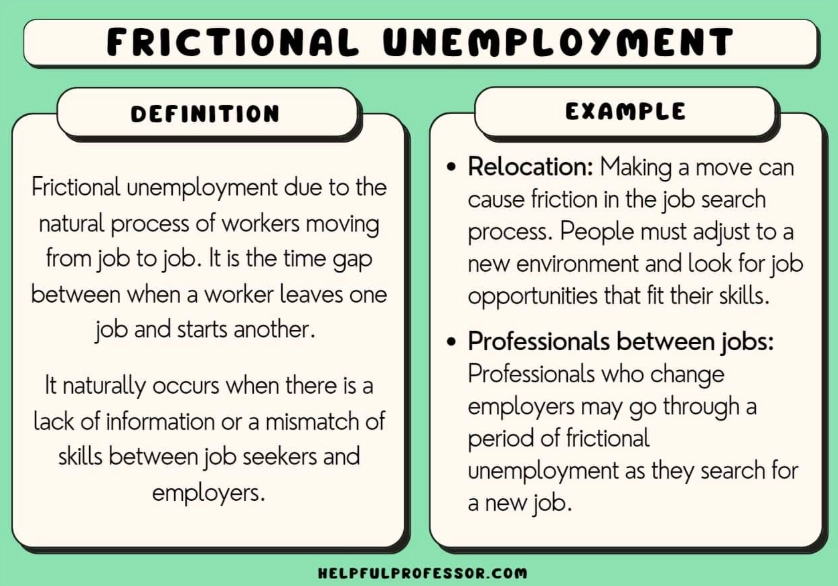
Confusing these two is a common and costly mistake. Understanding the difference tells you what your next move should be.
Frictional Unemployment is a matching problem. Your skills are in demand, and jobs are available, but the connection hasn't been made yet. The solution is better search tools, networking, and information flow.
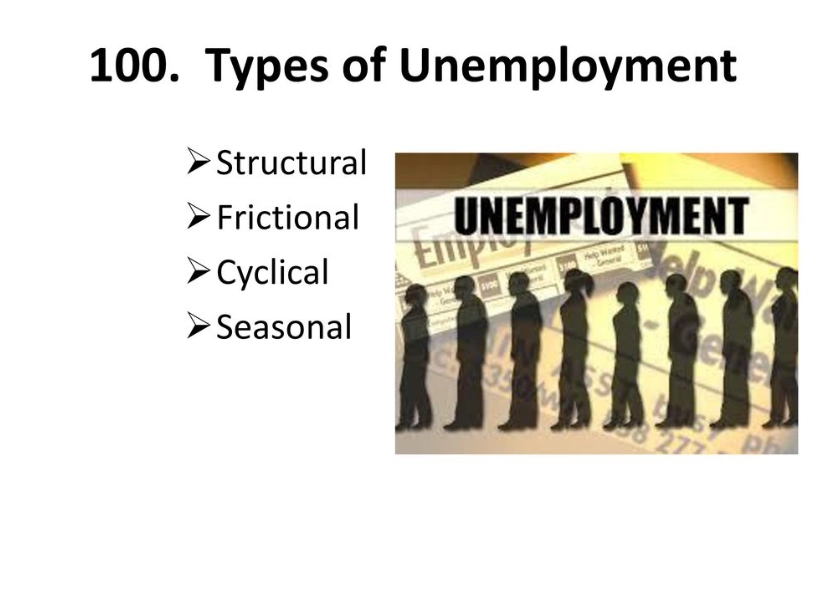
Structural Unemployment is a mismatch problem. Your skills are no longer in demand because the economy has changed. The jobs available require different skills. The solution is retraining, education, or a major career pivot.
Imagine a seasoned coal miner in a region where mines have closed permanently. If he applies to 100 mining jobs and gets nowhere, that's not frictional—it's structural. The jobs he's qualified for don't exist in sufficient numbers. His unemployment won't be solved by a better resume; it requires learning a new trade, like solar panel installation.
Mistaking a structural problem for a frictional one means you'll waste months applying for jobs that no longer exist, burning through savings and confidence. A quick audit can help: are people with your exact title and skill set getting hired? If yes, your problem is likely frictional. If not, you need a different strategy.
How to Shorten Your Frictional Unemployment Period
This is the actionable core. The "friction" can be reduced. Based on my own stumbles and observing hundreds of career transitions, here's what actually works, ranked by impact.
1. Network with a Purpose, Not Just for Leads
The classic advice is "network." The bad advice is to ask everyone for a job. That creates pressure and rarely works. The expert move is to network for information and pattern recognition.
Set up calls with people in roles or companies you target. Don't ask for a job. Ask: "What's the biggest challenge your team is facing this quarter?" or "What skills have become most valuable in your role in the last two years?" This gives you intelligence to tailor your applications and interview answers. Often, this leads to a referral naturally because you've shown insight, not desperation. I landed my current role because an informational interview revealed a project I'd done was exactly the kind of problem they were trying to solve.
2. Optimize for the Algorithm and the Human
Your resume has two audiences: the Applicant Tracking System (ATS) and the hiring manager. Most people fail the first test.
- For the ATS: Use standard job title headers (e.g., "Marketing Manager"), include keywords from the job description verbatim, and use a simple, clean format without columns or graphics. Tools like Jobscan can help.
- For the Human: At the top, add a 3-line "Impact Summary" with quantifiable achievements (e.g., "Grew organic traffic 40% in 12 months"), not a generic "objective."
The biggest error I see? A beautiful, graphic-heavy resume that gets instantly rejected by the ATS before any human ever sees it.
3. Treat Your Search Like a Sales Funnel
Track your metrics. It removes emotion and reveals bottlenecks.
| Stage | Your Weekly Goal | Conversion Rate (Healthy Target) | Action if Lagging |
|---|---|---|---|
| Applications Sent | 10-15 quality applications | 100% (This is your input) | Expand search criteria, improve sourcing. |
| First-Round Interviews | 2-3 | 10-20% of applications | Revise resume/cover letter for ATS & relevance. |
| Final-Round Interviews | 1 | 50% of first rounds | Practice behavioral interviews, research company deeper. |
| Job Offers | – | 25-50% of final rounds | Work on negotiation skills, clarify your value proposition. |
If you're sending 30 applications and getting zero calls, the problem is your resume. If you're getting calls but no second rounds, the problem is your interview skills. This data doesn't lie.
4. Master the "Employment Gap" Narrative
A gap is only a red flag if you present it as dead time. Frame it as strategic upskilling.
Instead of "I was unemployed for 6 months," you say: "After leaving my previous role, I dedicated time to deepening my expertise in data analytics, completing a certification in SQL and Tableau, and consulting on a short-term project for a local nonprofit to apply those skills. I'm now eager to bring this enhanced toolkit to a full-time role."
This transforms friction into a period of intentional growth.
Your Frictional Unemployment Questions, Answered
How long does frictional unemployment typically last?
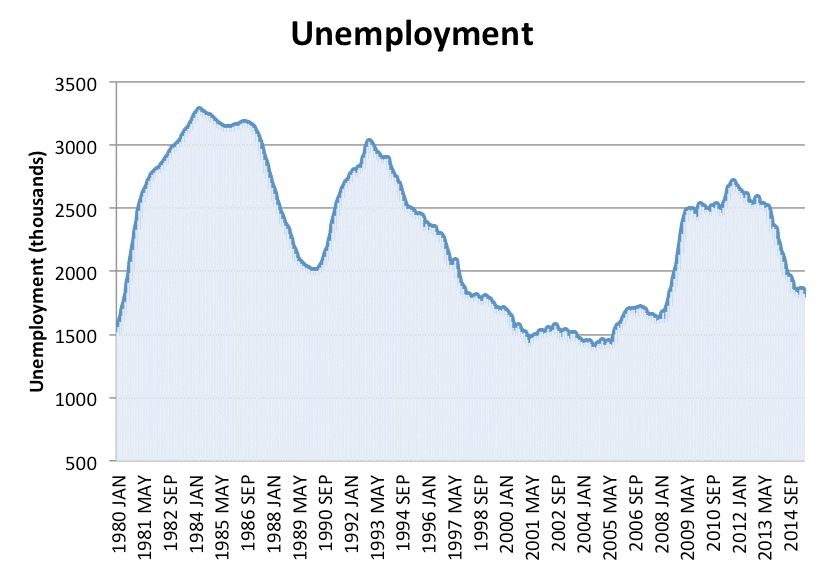
There's no universal number, which is why generic answers are useless. It depends entirely on your field, level, and geography. According to data from the U.S. Bureau of Labor Statistics, the median duration of unemployment can range from 5 weeks to over 20 weeks across different demographics and economic cycles. A more practical gauge: in a normal economy, for a professional with in-demand skills, a search taking 1 to 4 months is common. If you're pushing past 6 months with diligent effort, it's time to seriously audit whether your issue is still frictional or has tipped into structural territory.
 Does collecting unemployment insurance mean I'm not frictionally unemployed?
Not at all. This is a common misconception. Frictional unemployment is an economic classification based on the reason for unemployment (searching for a new match). Unemployment insurance is a government program with specific eligibility rules (often involving prior earnings and reason for separation, like a layoff). Many people who are frictionally unemployed—especially those who were laid off from jobs where demand for their skills still exists—are eligible for and should use UI benefits. It's a crucial financial bridge that allows for a more thoughtful search, rather than a panicked rush into a bad-fit job.
What's the one mistake that most prolongs the job search?
The "spray and pray" approach—applying to hundreds of jobs with a generic resume. It feels productive because you're busy, but it yields low-quality results. You become a forgettable name in a stack. The slower, more painful, but ultimately faster method is to target 5-10 ideal companies/roles per week. Research them deeply. Find a connection on LinkedIn. Tailor your resume and cover letter to speak directly to a problem mentioned on their website or in a news article. This converts applications from lottery tickets into targeted investments. It takes more effort per application, but your callback rate will be multiples higher, shortening the overall search period dramatically.
 Frictional unemployment is the grease in the gears of a modern labor market. It allows for movement, growth, and better matches between people and work. The anxiety it creates is real, but it's also manageable. By reframing it not as a personal failure but as a natural phase in a dynamic career, and by applying a strategic, data-informed approach to your search, you control the clock. You reduce the friction. The goal isn't to fear this period, but to navigate it with such efficiency that it becomes a brief, purposeful pivot rather than a painful pause.
Reader Comments