Let's talk about petty cash. It sounds simple, right? A little box of money for coffee runs, emergency supplies, or a last-minute postage stamp. For many small business owners, it's an afterthought. That's the first mistake. A poorly managed petty cash fund is a leak in your financial boat. It's not about the amount—$50 or $500—it's about the principle. Disorganized cash handling erodes trust, creates bookkeeping headaches, and can even open the door to minor fraud. I've seen it happen in companies I've consulted for. The owner is focused on the big picture, while the loose change in the drawer causes monthly reconciliation nightmares.
Good petty cash management isn't about bureaucracy. It's about creating a simple, clear system that everyone follows. It saves you time, protects your assets, and gives you a clear picture of where those small, frequent expenses are going. This guide will walk you through setting up a system that actually works, avoiding the common traps, and turning this mundane task into a strength for your internal controls.
What's Inside This Guide
What Exactly Is a Petty Cash Fund (And What It's Not)
A petty cash fund is a small amount of company cash, kept on hand to pay for minor, incidental expenses. Think supplies under $25, emergency taxi fare for a client, or cash for a team pizza lunch. The key word is minor and immediate.
It is not a personal loan fund for employees. It's not a substitute for a corporate credit card for larger purchases. And it's definitely not a slush fund for undocumented spending. The moment you start using it for anything outside small, legitimate business expenses, you lose control.
Many business owners confuse it with a "drawer of loose cash." That's unstructured and dangerous. A true fund has a fixed balance (e.g., $100), a custodian responsible for it, and a strict process for requesting cash and submitting receipts.
How to Set Up Your Petty Cash Fund: A 5-Step Blueprint
Don't just throw money in an envelope. Follow this structure.
Step 1: Determine the Float Amount
How much do you need? Look at 2-3 months of past small cash expenses. If you spent about $80 per month, a $100 float is reasonable. Start small—you can always increase it. A common mistake is setting it too high, which increases risk and reduces the incentive for timely reimbursement.
Step 2: Appoint a Single Custodian
One person is in charge. This is crucial for accountability. It should be someone trustworthy, organized, and often in the office (e.g., an office manager, not a salesperson always on the road). Their job is to safeguard the cash, issue it, and collect receipts.
Step 3: Choose a Secure Location
A locked cash box is the minimum. For anything over $200, consider a small safe. It should be in a discreet but accessible location for the custodian. Not in an unlocked desk drawer.
Step 4: Create the Documentation System
You need two forms: a Petty Cash Voucher and a Petty Cash Log.
The Voucher is filled out by the employee requesting cash. It must include date, amount, purpose, and their signature. The custodian gives them cash and keeps the voucher.
The Log (usually a spreadsheet or a sheet in the cash box) is maintained by the custodian. Every transaction—adding to the fund, disbursing cash, reimbursing—is recorded here with date, voucher number, description, amount in/out, and running balance.
Step 5: Fund It and Set the Rules
Write a company check to "Petty Cash" or withdraw cash, and place it in the box with the starting log entry. Then, communicate the rules to everyone: maximum per item (e.g., $25), what expenses are allowed, the requirement for a receipt for every disbursement, and the process to get cash.
The Golden Rules for Daily Operation
Once set up, these rules keep it running smoothly.
- No Receipt, No Reimbursement. This is non-negotiable. If an employee loses a receipt, they should write a signed note explaining the expense. More than once? They cover the cost.
- The Voucher is King. Cash never leaves the box without a completed voucher attached. The voucher stays with the custodian until a receipt replaces it.
- Immediate Reconciliation. The custodian should ensure the physical cash plus the total of all outstanding vouchers/receipts equals the designated float every time cash is issued or a receipt is submitted.
- No "IOUs." The fund is for business expenses, not personal loans. Mixing the two is a recipe for confusion and conflict.

The Non-Negotiable Reconciliation Process
This is where most systems fail. Reconciliation should happen at least monthly, or when the fund gets low. Here's how it works, step-by-step.
- Gather Everything: The custodian collects all receipts and outstanding vouchers from the cash box.
- Count the Physical Cash: Count the actual coins and bills in the box.
- Do the Math: Physical Cash + Total Value of Receipts/Vouchers = Should equal your original float amount (e.g., $100).
- Replenish the Fund: If you have $20 in cash and $80 in receipts, you need $80 to bring the fund back to $100. Write a company check for $80, coded to the various expense accounts (Office Supplies, Meals, etc.) based on the receipts.
- Record and File: The check replenishment is recorded in your accounting software. The receipts are stapled to a summary sheet and filed for tax purposes.

Here’s a snapshot of what a simple reconciliation might look like:
| Date | Description | Voucher # | Amount Out | Receipt Submitted | Running Balance |
|---|---|---|---|---|---|
| Oct 1 | Starting Balance | - | - | - | $100.00 |
| Oct 5 | Postage Stamps | 101 | $12.50 | Yes | $87.50 |
| Oct 12 | Office Coffee | 102 | $18.00 | Yes | $69.50 |
| Oct 20 | Batteries for Mouse | 103 | $8.99 | Pending | $60.51 |
| Oct 25 | Cleaning Supplies | 104 | $24.30 | Yes | $36.21 |
| Reconciliation Summary | Physical Cash Count: $36.21 + Receipts Total: $54.80 ($12.50+$18+$24.30) = $91.01. Missing: $8.99 (Voucher 103 pending receipt). Fund needs $63.79 to restore $100 float. | ||||
Top 3 Petty Cash Pitfalls That Cost You Money
After auditing dozens of small businesses, I see the same errors repeatedly.
1. The "Floating" Float
The custodian gets lazy and doesn't reconcile before replenishing. They just ask for "about $80" because the box looks empty. Over time, the actual float drifts, and you lose track of the true balance. The fix? Never replenish without a full reconciliation. The check amount must exactly match the total of the submitted receipts.
2. The Non-Business Expense Creep
It starts with "I'll just borrow $10 for lunch and pay it back tomorrow." Tomorrow never comes. Soon, the fund is used for personal advances. This blurs lines and complicates accounting. The rule must be absolute: Petty cash is for business expenses only, paid directly to a vendor, not an employee.
3. The Lost Receipt Black Hole
A missing receipt isn't just a missing piece of paper. For tax purposes, it's a disallowed expense. If you can't document it, you can't deduct it. More importantly, it's a breakdown in control. Implement a strict policy: a lost receipt requires a signed explanatory memo from the employee, approved by a manager, and it should be a rare exception.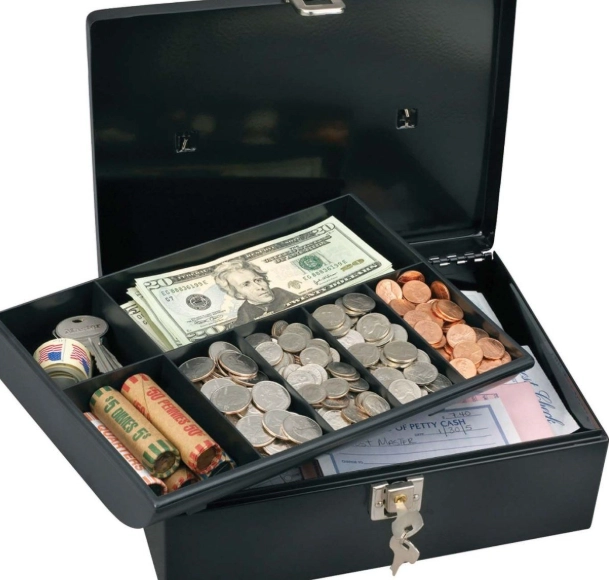
A subtle but critical point: Many owners think a petty cash expense is "too small to matter" for taxes. The IRS doesn't care about the amount, only the legitimacy and documentation. A year's worth of undocumented $15 expenses adds up to a significant, non-deductible sum and a red flag in an audit.
Reader Comments