Let's cut to the chase. If you're running a business and not living inside your profit and loss statement, you're flying blind. It's not just a document for your accountant or tax season. It's the raw, unfiltered story of your business's performance. Every sale, every coffee run for the office, every failed marketing campaign—it's all in there. I've seen too many smart entrepreneurs focus solely on the money in the bank, only to get a nasty surprise months later. The bank balance is a snapshot; the P&L is the full movie.
Quick Navigation: What's Inside This Guide
What a P&L Statement Actually Is (Beyond the Jargon)
A profit and loss statement, also called an income statement, is a financial report that summarizes your revenues, costs, and expenses over a specific period—like a month, quarter, or year. Its sole job is to answer one question: Did my business make money or lose money during this time?
Think of it like your personal monthly budget, but for your company. You list all the money coming in (sales, service fees) and all the money going out (rent, salaries, software subscriptions). What's left at the bottom is your profit, or if you're in the red, your loss.
Here’s the thing most generic guides miss: the P&L works on an accrual basis in its pure accounting form. That means it records income when it's earned (not when you get paid) and expenses when they're incurred (not when you pay the bill). This gives you a truer picture of performance, even if it feels disconnected from your cash flow. For very small businesses, a simpler cash-based view (recording only when cash moves) can be more practical, but understanding the accrual concept is crucial as you grow.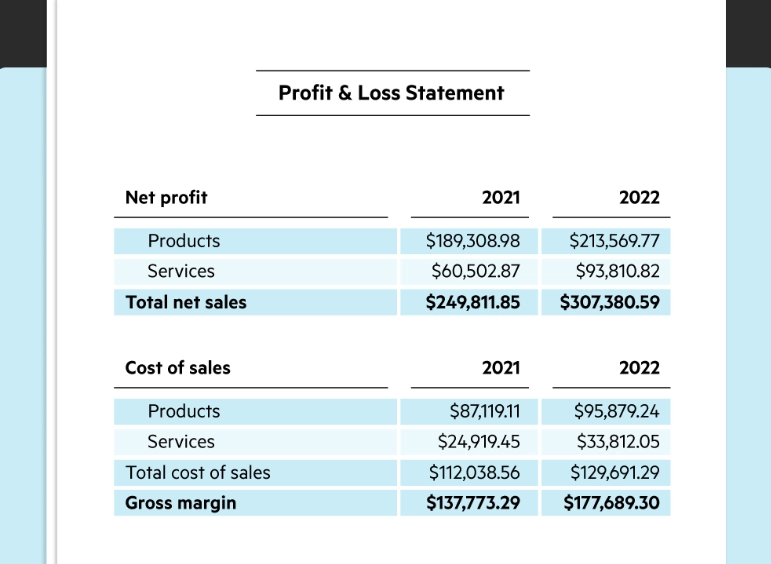
Breaking Down the P&L: Line by Line
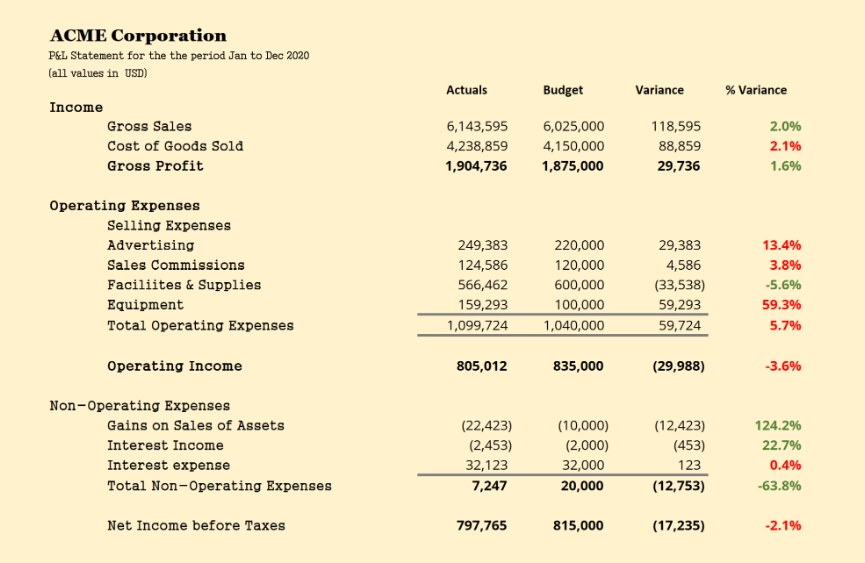
Let's use our coffee shop example to build a clear P&L table. This is the structure you'll see in any decent accounting software or template.
| Line Item | Description & Why It Matters | Brewed Awakening (Jan) |
|---|---|---|
| Revenue (or Sales) | Top line money in. All income from primary business activities. For Brewed Awakening, it's drink/food sales. For a consultant, it's fees. This is your starting point. | $20,000 |
| Cost of Goods Sold (COGS) | Direct costs to make your product/service. For the coffee shop: coffee beans, milk, pastries, disposable cups. For a SaaS company, it might be server costs. High COGS relative to revenue means low product margin. | $7,000 |
| Gross Profit | Revenue - COGS. This is your first crucial health check. It tells you if your core product/service is priced right. This is the number I look at first. | $13,000 |
| Operating Expenses (OpEx) | Costs to run the business day-to-day. Rent, salaries (not directly making the product), marketing, software, insurance, utilities. This is where efficiency (or bloat) lives. | $11,000 |
| Operating Income | Gross Profit - Operating Expenses. Also called EBIT (Earnings Before Interest and Taxes). This shows profit from core operations before financing and taxes. | $2,000 |
| Other Income/Expenses | Non-core financial activity. Interest earned on savings, interest paid on loans, one-time gains/losses (e.g., selling old equipment). | ($200) (loan interest) |
| Net Profit (The Bottom Line) | The final score. Operating Income + Other Income - Other Expenses. This is your true profit before taxes. The number that ultimately matters for sustainability. | $1,800 |
Gross Profit Margin and Net Profit Margin are the percentages you get by dividing Gross Profit and Net Profit by Revenue, respectively. They're your key performance indicators (KPIs). Brewed Awakening's Gross Margin is 65% ($13k/$20k), which is decent for a cafe. Their Net Margin is 9% ($1.8k/$20k).
The Subtle Difference Between COGS and OpEx That Trips Everyone Up
This is a classic point of confusion. If you're a service business like a marketing agency, your employee salaries for those doing the client work are your COGS. Their time is the "product" you're selling. Their salary is a direct cost of delivering that service. The office manager's salary is OpEx. Misclassifying here distorts your gross margin and makes it impossible to know if your services are inherently profitable.
How to Create Your First P&L Statement
You don't need an accounting degree. Here's a practical, step-by-step approach.
- Gather Your Data: Pull all bank and credit card statements for the period. Gather invoices you've sent (revenue) and bills you've received (expenses).
- Choose Your Tool: A simple spreadsheet (Google Sheets or Excel) works to start. Categorize each transaction. Better yet, use a dedicated tool like QuickBooks, Xero, or FreshBooks. They automate most of this by linking to your bank feeds.
- Categorize Religiously: This is the most important manual task. Every Starbucks charge? Is it "Office Supplies" for a client meeting (OpEx) or "Meals & Entertainment" for you? Be consistent. This is where small business accounting software saves hours of headache.
- Populate the Structure: Use the table structure above. Sum up all your revenue. Sum up all your direct costs (COGS). Subtract to get Gross Profit. List and sum all your operating expense categories. Subtract from Gross Profit.
- Review and Question: Look at the numbers. Does that software subscription you never use show up under OpEx? Does your gross margin seem too low compared to industry benchmarks (research from sources like IBISWorld can provide averages)? Your first P&L is a discovery tool.
Do this monthly. A yearly P&L is for taxes; a monthly P&L is for management.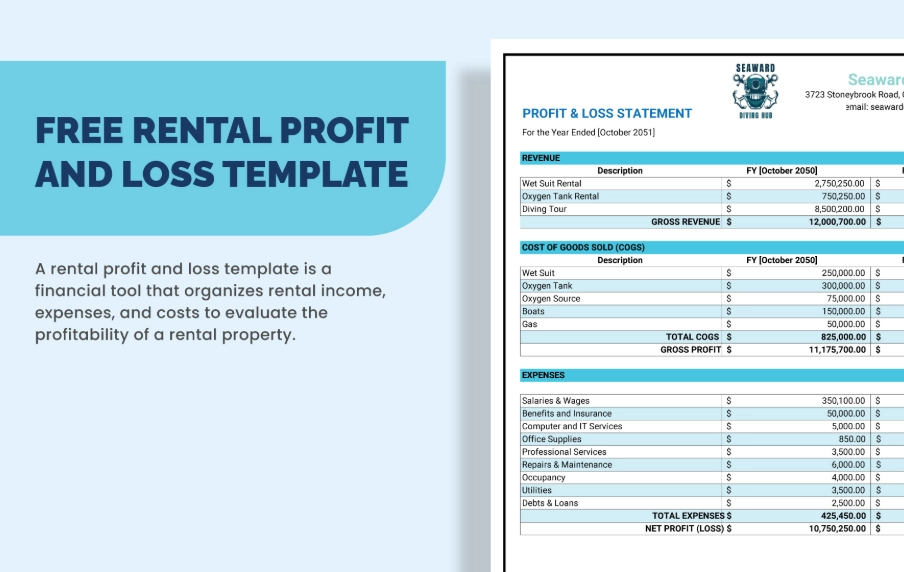
The 3 Costliest P&L Mistakes Business Owners Make
After years of consulting, I see these patterns repeatedly.
1. Confusing Cash Flow with Profit. This is the big one. You can have a profitable month on paper (P&L) but have no cash because clients haven't paid yet (Accounts Receivable) or you bought equipment. Conversely, you can have cash from a loan that isn't profit. Always look at your P&L and your cash flow statement together. The U.S. Small Business Administration has good primers on the difference.
2. Ignoring "Below the Line" Costs. Owners fixate on revenue and maybe COGS, but let operating expenses creep up unnoticed. That "small" $99/month SaaS tool? There are 10 of them. That's $12,000 a year eating your net profit. Regular expense audits are non-negotiable.
3. Not Accounting for Owner's Time (Properly). If you pay yourself a salary, it's an expense. If you don't, your P&L shows a higher profit, but it's a mirage. You're working for free. To get a true picture, include a reasonable salary for your role as an operating expense. The profit after that is what the business entity truly earned.
Moving Beyond Basics: Using Your P&L to Drive Decisions
A historical P&L is a report. A forecasted P&L is a plan. This is where it gets powerful.
Use last year's P&L as a base. Ask "what if" questions and model them.
**What if I hire a part-time social media manager for $2,000/month?** Add $24,000 to annual OpEx (Salaries & Marketing). Will the expected increase in revenue (from better marketing) outweigh that cost? If you project a $40,000 revenue increase with a 65% gross margin, that's $26,000 in new gross profit. Minus the $24,000 salary, you net +$2,000. Probably worth it.
**What if I raise prices by 5% but lose 3% of customers?** Model the new revenue, see the impact on gross profit. Often, the math works in your favor.
This proactive use turns your P&L from a rear-view mirror into a GPS.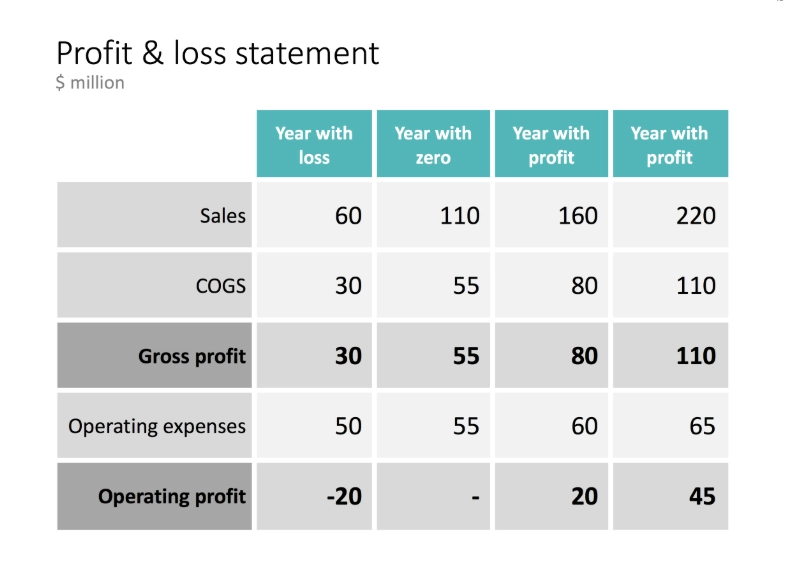
Your Top Profit and Loss Questions Answered
 Are there expenses that shouldn't go on the P&L?
 I use accounting software. Do I still need to understand this?
Reader Comments