Let's talk about the Request for Proposal, or RFP. If you've ever been on either side of one – as the company sending it out or the vendor scrambling to respond – you know it can feel like a necessary evil. A ton of work, often frustrating, and the results can be hit or miss. I've managed RFPs for everything from multi-million dollar software implementations to smaller marketing agency contracts. I've seen brilliant ones that landed perfect partners, and absolute train wrecks that wasted months and led to terrible deals.
The core problem? Most people treat the RFP like a bureaucratic form to fill out, not a strategic tool for making a critical business decision. They copy a generic template, ask vague questions, and then wonder why the responses are equally vague and impossible to compare.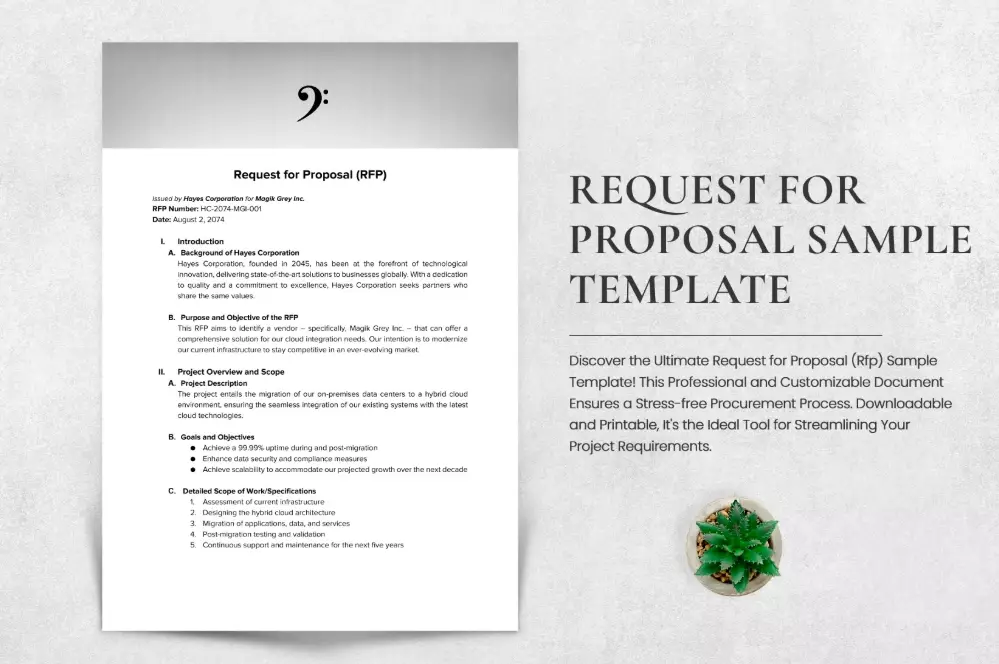
This guide is different. We're going to break down the RFP process into actionable steps for both buyers and sellers. I'll show you how to write an RFP that actually gets you the vendor you need, and how to respond to one in a way that truly stands out. Forget the fluff; this is the practical, from-the-trenches advice you won't find in most corporate playbooks.
What You'll Learn In This Guide
What an RFP Really Is (And Common Misconceptions)
At its heart, a Request for Proposal is a formal document you send to potential suppliers, inviting them to submit a detailed plan and price for how they would solve a specific problem or meet a set of requirements. It's used for complex purchases where price isn't the only factor – think IT systems, construction projects, ongoing services, or major consulting engagements.
Here's where most guides get it wrong. They present the RFP as a neutral information-gathering tool. It's not. From the moment you draft it, you are shaping the market's response. The questions you ask (or fail to ask) determine the answers you get.
Another misconception: the RFP is the start of your vendor search. It shouldn't be. It should come after you've done significant market research, identified a long list of potential candidates, and perhaps even had informal conversations. Throwing an RFP over the wall to a cold list of vendors you found on Google is a recipe for irrelevant responses.
The Critical Homework You Must Do Before Writing a Single Word
You wouldn't build a house without a blueprint. Don't write an RFP without this internal groundwork. Skipping this is the #1 reason RFPs fail.
Define the Problem, Not Just the Solution
Most RFPs jump straight to features: "We need a CRM with email integration and reporting." Stop. First, articulate the business problem. Is sales data scattered across spreadsheets, causing reps to miss follow-ups? Are customer service response times too slow because agents lack client history? Write this problem statement down and share it with your internal team. Get consensus. This statement will go in your RFP and align every vendor on your core pain point.
Build Your Cross-Functional Team
An RFP led solely by procurement is a disaster. An RFP led solely by IT is just as bad. You need a team:
- Project Owner/Champion: The ultimate decision-maker with budget authority.
- End-Users: The people who will use the product/service daily. Their input on usability is gold.
- Technical Evaluators: IT, security, or engineering staff to assess feasibility and integration.
- Procurement/Finance: To handle contractual and commercial terms.
Get this team together early. Have a kickoff meeting. Document everyone's needs, fears, and "must-haves." This prevents scope creep and political battles later.
Create Your Initial Requirements List
Before looking at any vendor's website, list what you need. Categorize them:
Mandatory Requirements: Non-negotiable. If a vendor can't meet these, they're out. (e.g., "Must be SOC 2 Type II certified," "Must integrate with our existing ERP system, SAP S/4HANA").
Important Requirements: High-priority features or capabilities that will heavily influence scoring.
Nice-to-Haves: Features that would be beneficial but aren't deal-breakers.
This list is your internal guide. It will later become the scored section of your RFP.
How to Write a Winning RFP: A Section-by-Section Breakdown
Now, let's build the document. Ditch the corporate-speak. Be clear, direct, and respectful of the vendor's time. A good RFP is a collaboration tool, not an interrogation.
1. Executive Summary & Background
Start with a compelling overview. Who are you? What's your company's mission? What's the specific challenge driving this project? This isn't fluff. It helps vendors understand your context and propose more tailored solutions. A vendor who "gets" your business will write a better proposal.
2. Project Scope & Objectives
Detail the project's boundaries. What's in scope? What's explicitly out of scope? State 3-5 clear, measurable objectives. Instead of "improve customer service," try "Reduce average ticket resolution time from 48 hours to 12 hours within 6 months of implementation." Measurable objectives allow vendors to propose concrete solutions and let you hold them accountable later.
3. Detailed Requirements & Questions
This is the meat. Present your categorized requirements list. Use a mix of question formats:
- Yes/No with Evidence: "Do you offer 24/7/365 support with a guaranteed 1-hour response time for critical issues? If yes, describe your support team structure and provide relevant SLA documentation."
- Descriptive: "Walk us through your standard implementation methodology for a client of our size and complexity. Include key phases, timelines, and client responsibilities at each stage."
- Scenario-Based: "Describe how your platform would handle the following situation: A customer's order fails during payment processing. What alerts are generated, and what workflow would your system trigger for our customer service team?"
Scenario questions are killer. They reveal how a vendor thinks, not just what their brochure says.
4. Submission Guidelines & Timeline
Be brutally clear. Specify the deadline (date and time, including timezone). Define the submission format (PDF? Online portal? Email?). State the page limit. List all required attachments (company profile, case studies, certificates of insurance, references). Provide a clear timeline for the entire process:
- RFP Issued: [Date]
- Deadline for Vendor Questions: [Date]
- Responses to All Questions Published: [Date] (This is crucial for fairness!)
- Proposal Submission Deadline: [Date]
- Shortlist Notifications: [Date]
- Final Presentations/Demos: [Date Range]
- Final Decision & Contract Award: [Date]
Stick to this timeline. Respecting vendors' time builds goodwill and ensures you get their best effort.
5. Evaluation Criteria
Tell vendors exactly how you will score them. A typical weighting might be:
- Overall Solution Fit & Technical Capability: 40%
- Total Cost of Ownership (Price, implementation, 3-year support): 30%
- Company Stability & Relevant Experience: 20%
- Implementation Plan & Approach: 10%
This transparency forces you to be objective and helps vendors focus their proposals on what matters most to you.
The Vendor Evaluation Process: Moving Beyond the Cheapest Bid
You've got the proposals. Now the real work begins. If you scored based on your pre-defined criteria, you'll have a quantitative starting point. But don't be a slave to the spreadsheet.
Assemble your evaluation team. Have each member review the proposals independently first, then meet to discuss. Look for inconsistencies, over-promising, and vague language. The proposal is a sample of the vendor's work. Is it well-organized, error-free, and directly responsive to your questions? If not, that tells you something about their attention to detail.
The shortlist phase (usually 2-3 vendors) is where you dig deep. The demo or presentation is critical. Don't let them run a canned sales pitch. Give them a script based on your real-world scenarios from the RFP. Have your end-users ask questions. Watch how they interact. Are they listening or just selling?
Reference checks are non-negotiable. Don't just call the references they provide. Ask for a reference from a client who had a problem or a challenging implementation. Ask specific questions: "Was the project delivered on time and on budget? What was the single biggest challenge you faced working with them? Would you hire them again?"
Finally, negotiate. But understand that the best negotiation happens before you issue the RFP, by structuring clear requirements. Post-proposal, focus on value, not just hacking down the price. Maybe you can get better payment terms, extra training, or a longer warranty.
Expert RFP FAQ: Answering Your Toughest Questions
 What's the biggest mistake you see companies make when evaluating RFP responses?
 The RFP process is a marathon, not a sprint. It demands upfront rigor, clear communication, and disciplined evaluation. Done right, it's not a barrier but a bridge – a bridge to finding a true partner who can help solve your business problems for years to come. Ditch the templates that treat vendors like interchangeable parts. Use the process to start a real conversation. The quality of your RFP directly determines the quality of the proposals you receive, and ultimately, the success of your project.
Reader Comments