Let's cut through the noise. Venture capital isn't just Silicon Valley glamour and billion-dollar headlines. It's a specific, high-stakes engine for funding young companies with explosive growth potential—companies that traditional banks wouldn't touch with a ten-foot pole. If you're a founder with a big idea but no revenue, or an investor curious about where the next big thing comes from, understanding venture capital is crucial. It's not free money. It's a trade: significant funding today for a significant piece of your company's future.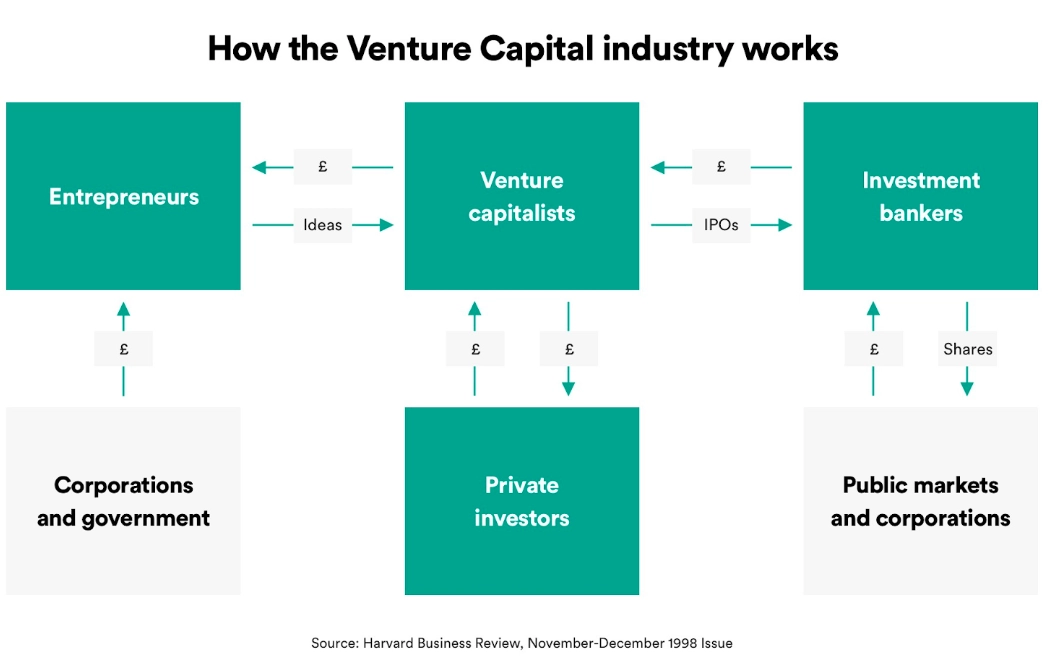
What You'll Learn Inside
VC Defined: More Than Just Money
At its core, venture capital is a form of private equity financing provided by firms or funds to startups and early-stage companies deemed to have high growth potential. The capital comes from limited partners (LPs) like pension funds, university endowments, and wealthy individuals. The VC firm's partners (the General Partners or GPs) pool this money and invest it in exchange for equity—an ownership stake.
But here's the part everyone glosses over: VC is a hits-driven business. Most investments will fail or just break even. The entire model relies on finding and fueling the one company in a portfolio that returns 10x, 50x, or 100x the initial investment to cover all the losses and then some. This shapes everything they do, from the sectors they target (software, biotech, clean energy) to the intense pressure they put on founders to scale, fast.
It's not charity. It's a calculated, high-risk bet.
How the Venture Capital Process Actually Works
Think of it as a multi-stage journey, not a one-time event. Each stage has a different goal, risk level, and check size.
The Funding Stage Breakdown
Pre-Seed & Seed Stage: This is the "prove the idea" phase. Funding might range from $500k to $2 million. The goal is to build a minimum viable product (MVP), get initial users, and demonstrate there's a real problem being solved. Investors here are often angel investors, micro-VCs, or early-stage funds. They're betting on the team and the vision more than hard data.
Series A: Now it's about "prove the model." Companies have some traction—consistent revenue, strong user growth—and need capital ($2M to $15M) to optimize their product, find a repeatable sales process, and scale the team. VCs here dig deep into metrics and unit economics.
Series B and Beyond: This is the "scale the business" phase. Funding rounds get larger ($10M to $100M+). The company is a proven entity in a growing market. Money is for expanding into new regions, acquiring other companies, or fending off competitors. Later-stage VCs and private equity firms join the party.
The end goal for the VC is an "exit," where they cash out their equity stake. This usually happens through an Initial Public Offering (IPO) where the company goes public, or through an acquisition by a larger company (like Google buying a startup).
A Non-Consensus View: Many founders fixate on valuation—how much their company is worth during a fundraise. Experienced founders worry more about ownership dilution and control. Giving up 25% of your company in a Series A might get you the cash, but what happens after Series C? If you're down to 15% ownership and the board (now controlled by VCs) wants to sell the company, you might have little say. The smart money thinks in percentages, not just dollar signs.
VC vs. Angel Investing: Key Differences
People confuse these all the time. They're both early-stage investors, but the mechanics are worlds apart.
| Aspect | Venture Capital (VC Firm) | Angel Investor |
|---|---|---|
| Source of Funds | Other people's money (Limited Partners) | Their own personal wealth |
| Check Size | Larger ($2M - $50M+ per round) | Smaller ($25k - $500k typically) |
| Investment Stage | Seed, Series A, B, C and later | Very early (Pre-seed, Seed), sometimes idea-stage |
| Decision Speed | Slower (weeks to months, requires partner meetings & due diligence) | Faster (can be days, based on personal conviction) |
| Involvement Level | High. Often take a board seat and expect formal reporting. | Variable. Can be hands-on mentor or passive check-writer. |
| Primary Motivation | Financial return for their fund's LPs. Must follow a strict mandate. | Mix of financial return and personal passion/helping founders. |
An angel might write a check because they love your story. A VC firm writes a check because your metrics fit their fund's thesis and they've modeled out how you can become a billion-dollar business. Both are valuable, but knowing who you're talking to saves everyone time.
The Founder's Dilemma: Pros and Cons of Taking VC Money
Is venture capital right for your startup? It's not a default yes. Let's weigh it.
The Good Stuff (The Pros):
- Fuel for Hyper-Growth: You get the large capital infusion needed to hire a top team, market aggressively, and outpace competitors before they catch up.
- Credibility & Network: A top-tier VC's name on your cap table is a signal to customers, future hires, and later investors. Their network for biz dev, hiring, and follow-on funding is invaluable.
- Strategic Guidance: Good VCs have seen the movie before. They can help you navigate scaling pitfalls, introduce key hires, and plan your next financing round.
The Hard Truths (The Cons):
- Loss of Control & Autonomy: You now have a board to answer to. Major strategic decisions (hiring a CRO, pursuing an acquisition, raising more money) often require board approval. Your vision can get diluted by committee.
- The Growth-at-All-Costs Pressure: VCs need outsized returns. This often translates to pressure to prioritize growth rate over profitability, which can lead to burning cash unsustainably and making short-term decisions that hurt long-term culture.
- Ownership Dilution: You are selling chunks of your company. Founders who go through multiple VC rounds can end up with a surprisingly small piece of the pie they built, especially if they didn't manage their cap table wisely.
My take? VC is a fantastic tool for a specific type of company: one in a massive market with a clear path to dominating it through rapid scaling and network effects (think social networks, marketplaces, platform software). If you're building a profitable, steady-growth lifestyle business or a services firm, VC is likely a mismatch that will make you and your investors miserable.
How to Get VC Funding: A Realistic Path
Forget cold emailing partners with a 50-page business plan. That almost never works. The path is more nuanced.
1. Build Traction First, Pitch Later. The best pitch is a graph going up and to the right. User growth, revenue, engagement—something tangible that proves people want what you're building. VCs invest in momentum, not just ideas.
2. Get Warm Introductions. The VC world runs on trusted referrals. Use your network—other founders, lawyers, angels—to get an intro. A warm intro from a portfolio founder carries immense weight. Check the firm's website; many list how they prefer to be contacted.
3. Do Your Homework on the VC. Don't pitch a healthcare-focused fund your crypto app. Research their portfolio, investment thesis, and what stage they typically enter. Mentioning why you're a fit for their specific fund shows you're serious.
4. Nail the Story, Not Just the Slides. Your deck is important, but the narrative is everything. Can you clearly articulate the problem, why your solution is unique, how you'll capture the market, and why your team is the one to do it—in under 20 minutes?
5. Prepare for Brutal Due Diligence. If they're interested, they will dig into everything: your technology, financials, customer contracts, legal structure, and team backgrounds. Have your data room organized. Any fudging here will kill the deal and your reputation.
Remember, fundraising is a full-time job that distracts from building the product. Time it carefully.
Your VC Questions, Answered
How much equity do I typically give up in a Series A round?
There's no fixed rule, but 15-25% is a common range for a typical Series A. The percentage depends heavily on valuation, how much money you're raising, and your bargaining power (which comes from traction). A hot company with multiple term sheets might give up only 15%. A company with weaker metrics might have to give up 30% or more for the same amount of cash. The key is to model your cap table into the future—if you give up 25% in Series A, expect to give up another 15-20% in Series B, and so on. Will you have enough ownership left to stay motivated after all the dilution?
What do VCs look for in a startup team?
Beyond the obvious (smart, driven), they look for two things most founders underestimate: complementary skills and evidence of resilience. A team of three brilliant engineers with no sales experience is a red flag. They want a technical founder, a product/design thinker, and someone who can sell and market. As for resilience, they'll grill you on past failures. How did you handle a product launch that flopped? A key employee quitting? They're investing in people who can navigate the inevitable storms, not just sail in calm weather.
 Is venture capital funding slowing down or changing post-2021 boom?
Absolutely. The data from the National Venture Capital Association (NVCA) and PitchBook shows a significant correction from the 2021 peak. Money hasn't disappeared, but investor behavior has shifted dramatically. The bar for "growth at all costs" is gone. Now, VCs are obsessed with path to profitability, strong unit economics, and efficient growth. Founders who can show a clear plan to become cash-flow positive with the money they're raising have a major advantage. The era of funding ideas on a napkin is over for now. Due diligence is tougher, rounds take longer, and valuations are more grounded.
What are some common alternatives to venture capital?
VC is just one path. Bootstrapping (funding with customer revenue) keeps full control. Revenue-based financing (like Clearbanc) provides capital in exchange for a percentage of future revenue. Angel investors are great for smaller, earlier checks. Small Business Administration (SBA) loans offer debt for qualifying companies. And for certain hardware or biotech startups, government grants (like from the National Science Foundation) are non-dilutive options. The best choice depends entirely on your business model, growth speed, and how much control you want to retain.
Reader Comments