Inflation isn't some abstract economic concept. It's the reason your grocery bill feels heavier and that vacation you planned last year now costs 15% more. You feel it every day. But what's actually behind it? Most explanations stop at "too much money chasing too few goods," which is like saying a car moves because of wheels—technically true, but useless if you need to fix the engine.
The real story is a tug-of-war between three powerful forces. Understanding them is the difference between feeling helpless about your budget and making smart decisions with your money.
What You'll Learn in This Guide
What Inflation Really Means (Beyond the Jargon)
Let's cut through the noise. Inflation is a sustained increase in the general price level of goods and services in an economy over time. The key word is "general." It's not just one thing getting expensive; it's a broad trend where your money buys less than it did before.
The most common measure is the Consumer Price Index (CPI), tracked by agencies like the U.S. Bureau of Labor Statistics. It's a basket of typical household expenses—food, housing, energy, healthcare, transportation. When the CPI goes up, the purchasing power of your dollar goes down.
Mild inflation (around 2%) is considered normal and even healthy for a growing economy. It's when it accelerates and stays high that problems start. Think of it like a fever. A slight temperature might mean your body is fighting something off. A high, persistent fever means there's a serious issue that needs attention.
The 3 Main Drivers of Inflation
Economists boil it down to three core mechanisms. In reality, they often happen together, but one usually takes the lead.
1. Demand-Pull Inflation: Too Much Money, Not Enough Stuff
This is the classic "overheating" scenario. Aggregate demand in the economy outpaces aggregate supply. Simply put, people and businesses want to buy more than what's currently being produced.
What triggers it?
- Loose Monetary Policy: When central banks (like the Federal Reserve) keep interest rates very low or engage in quantitative easing (printing money to buy bonds), borrowing becomes cheap. This floods the economy with cash. Businesses invest, consumers spend on credit, and demand surges. The post-2020 period is a textbook case, where massive stimulus checks and near-zero rates collided with constrained supply.
- Expansionary Fiscal Policy: Government spending sprees, like large infrastructure bills or direct stimulus payments, put money directly into people's pockets, boosting demand.
- Consumer Confidence Boom: When people feel optimistic about the future, they spend more and save less.
The result? Sellers can raise prices because buyers are competing for limited goods. I remember talking to a car dealer in 2021. He said, "I'm not setting the price. The last five people who walked in are setting it by outbidding each other." That's demand-pull in action.
2. Cost-Push Inflation: When Making Things Gets More Expensive
This one comes from the supply side. The costs of production rise, so companies pass those higher costs onto consumers to protect their profit margins. Demand might not have changed at all.
The usual suspects:
- Rising Commodity Prices: Oil is the big one. A spike in energy costs makes transportation, manufacturing, and heating more expensive across the board. The 1970s oil shocks are the historic example. The 2022 surge after Russia's invasion of Ukraine is a modern replay.
- Supply Chain Disruptions: Remember the global semiconductor shortage? It didn't just affect PlayStation prices. It crippled auto production, appliance manufacturing, and more. Fewer goods on shelves with steady demand equals higher prices. The COVID-19 lockdowns were a masterclass in causing cost-push inflation.
- Increased Labor Costs: If wages rise rapidly (due to labor shortages, strong unions, or new minimum wage laws) and productivity doesn't keep up, businesses face higher per-unit costs.
Here's a subtle point most miss: cost-push inflation is trickier to fight. Raising interest rates can crush demand, but it doesn't unclog a port in California or lower the global price of wheat. You're treating a supply problem with a demand hammer, which can cause a recession.
3. Built-In Inflation (The Wage-Price Spiral)
This is the self-perpetuating monster. It starts when people expect prices to keep rising.
Workers, seeing higher costs for food and rent, demand higher wages to keep up. Employers, now facing higher wage bills, raise the prices of their products to maintain profits. Consumers see those higher prices and demand even higher wages in the next round. The cycle feeds itself.
This is why central banks fear high inflation expectations becoming "unanchored." Once this psychology sets in, it's incredibly difficult to stop without causing significant economic pain. The 1970s and early 80s were dominated by this dynamic, which is why the Fed under Paul Volcker had to raise rates to punishing levels (over 19%) to break the cycle.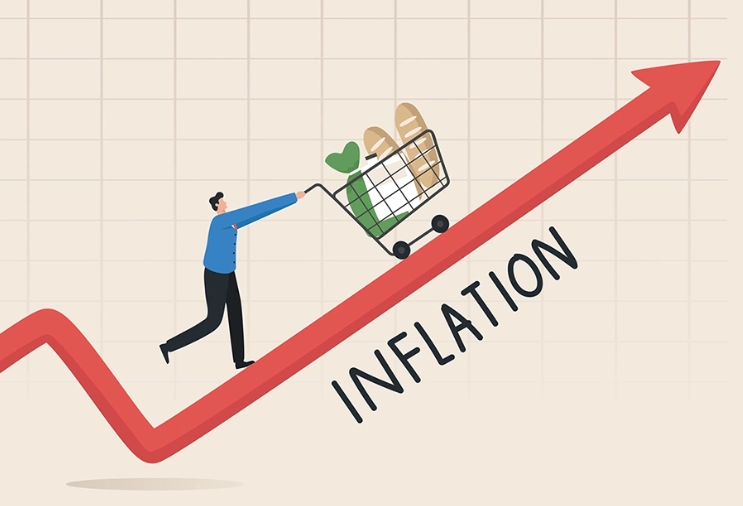
| Type of Inflation | Primary Driver | Key Symptom | Typical Policy Response |
|---|---|---|---|
| Demand-Pull | Excessive consumer/business spending | Low unemployment, high confidence, strong retail sales | Tighten monetary policy (raise interest rates) |
| Cost-Push | Rising production costs (energy, materials, labor) | Stagnant or falling growth alongside rising prices ("stagflation") | Mixed: Supply-side solutions (easing regulations, strategic reserves). Rate hikes risk recession. |
| Built-In | Inflation expectations & wage-price spiral | Long-term high inflation, entrenched in contracts and pricing models | Aggressive monetary tightening to reset expectations (painful but often necessary) |
How to Tell Which Type of Inflation You're Facing
You don't need a PhD. Look at a few key data points together.
Check the unemployment rate and consumer confidence indices (like The Conference Board's index). If they're sky-high alongside inflation, it's likely demand-pull. People have jobs and feel good, so they're spending.
Now, look at producer price indexes (PPI) or import/export price data from sources like the World Bank. If the prices businesses are paying for raw materials and intermediate goods are shooting up months before consumer prices follow, that's a strong signal of cost-push pressure working its way through the system.
Finally, listen to the talk. Are labor unions negotiating for 7% annual raises based on future price expectations? Are companies announcing price increases in advance, citing "ongoing cost pressures"? That's the language of built-in inflation taking root.
How Inflation Hits Your Wallet and Investments
It's not uniform. Inflation acts like a thief that steals from some pockets more than others.
For Individuals: It's a regressive tax. If you spend a larger portion of your income on necessities like food, gas, and rent (which tend to rise fastest), you're hit harder than someone who spends more on discretionary items. Fixed-income earners, like retirees on a pension, see their buying power erode steadily.
For Businesses: Uncertainty is the killer. When future costs are unpredictable, long-term planning and investment freeze. Some businesses with strong pricing power (like dominant brands) can pass costs on. Small businesses with thin margins often can't and get squeezed out.
For Investors: It's a landscape reshuffle. Cash and traditional bonds are the big losers, as their fixed returns are eaten away. Real assets tend to hold up better. Real estate often acts as a hedge (property values and rents rise with inflation). Certain stocks—like those of companies in energy, materials, or with strong brand loyalty—can navigate it well. Others, especially growth stocks valued on distant future earnings, suffer as higher interest rates (used to fight inflation) reduce the present value of those earnings.
The worst personal finance move during high inflation? Letting large sums of money sit in a checking account earning 0.01% interest.
What Can Be Done About It? Policy & Personal Moves
On the macro level, it's primarily the central bank's job. Their main tool is interest rates. By raising the cost of borrowing, they cool off demand (addressing demand-pull). This is a blunt instrument. The goal is a "soft landing," slowing the economy just enough to tame inflation without triggering mass unemployment.
Governments can try to address cost-push factors: releasing strategic oil reserves, investing in infrastructure to ease supply bottlenecks, or facilitating trade agreements. These are slower and more complex.
What you can do personally:
- Invest, Don't Just Save: Move emergency funds to high-yield savings accounts or short-term Treasury bills (T-bills) to earn a yield closer to the inflation rate. For long-term money, stay invested in a diversified portfolio.
- Review Your Budget Ruthlessly: Identify non-essential subscriptions and discretionary spending. Inflation forces prioritization.
- Consider Your Career: In a wage-price spiral environment, staying in a role with stagnant wages is a losing game. Upskilling or seeking roles in high-demand industries can help your income outpace inflation.
- Debt is a Double-Edged Sword: If you have fixed-rate debt (like a 30-year mortgage), inflation effectively erodes the real value of what you owe. That's good. Variable-rate debt (like credit cards) becomes more expensive as rates rise. That's bad. Prioritize paying off the latter.
Your Inflation Questions, Answered
If inflation is caused by supply chain problems, why do central banks raise interest rates? Doesn't that hurt demand for no reason?
You've hit on the biggest policy dilemma of the last few years. Central banks often raise rates even during cost-push inflation for two reasons. First, they need to prevent the initial price shock from triggering a wage-price spiral (built-in inflation). By cooling demand, they reduce businesses' ability to pass on all cost increases. Second, it's their most direct and powerful tool. They can't fix a port backlog, but they can influence borrowing costs overnight. The risk, as you note, is causing a recession to fix a problem it didn't create. It's an imperfect solution because the toolbox for supply-side issues is limited.
Can inflation ever be a good thing?
Mild, predictable inflation (around 2%) is generally seen as beneficial. It encourages spending and investment over hoarding cash, which greases the wheels of the economy. It also allows for relative wage adjustments without requiring nominal wage cuts (which are psychologically painful and rare). A company can give a 2% raise to a high performer and 0% to a low performer in a 2% inflation environment. In 0% inflation, giving someone 0% feels like a punishment. So, a little inflation provides flexibility.
I keep hearing about "money printing" causing inflation. Is it really that simple?
It's a major oversimplification that leads people astray. Printing money (increasing the money supply) only causes inflation if that new money is actually spent and circulates through the economy. After the 2008 financial crisis, central banks printed enormous amounts of money (quantitative easing), but it largely stayed parked in the financial system, boosting asset prices (like stocks and houses) without causing massive consumer price inflation. Post-2020, the money was coupled with direct stimulus to households and supply constraints—that's when it flowed into the real economy and fueled demand-pull inflation. The velocity of money—how fast it changes hands—is the critical, often-ignored piece of the puzzle.
How do I protect my savings right now if I think high inflation will persist?
Diversify out of pure cash holdings. Allocate a portion to Series I Savings Bonds (I-Bonds), which are U.S. government bonds whose interest rate is tied directly to inflation. Consider Treasury Inflation-Protected Securities (TIPS) in your investment portfolio. For the equity portion, tilt towards sectors with pricing power: essential consumer staples, energy, and infrastructure. Real estate investment trusts (REITs) can provide some hedge. Most importantly, avoid reactive, fear-based decisions. A long-term, disciplined investment plan has historically been the best defense against inflation's erosion.
Understanding what causes inflation demystifies the headlines and the pressure on your budget. It's not magic or inevitable. It's the result of specific, identifiable forces—too much demand, rising costs, or fearful expectations. By recognizing which force is dominant, you can better anticipate what might happen next, from central bank moves to job market shifts, and make smarter choices with your own money. The goal isn't to become an economist, but to stop feeling like a passive victim of the economy and start navigating it.
Reader Comments