Let's cut to the chase. You're looking at a company's financials, maybe for an investment or a loan. The sales look great, profits are up. But there's a nagging question in the back of your mind: can this company actually afford its debt? That's where the interest coverage ratio comes in. It's not the flashiest metric, but in my experience, it's one of the most reliable early-warning signals for financial stress. I've seen too many "profitable" companies get into trouble because everyone focused on the top line and ignored this simple check.
The interest coverage ratio tells you how many times a company can cover its interest payments with its earnings. It's the financial equivalent of checking if you have enough monthly income to cover your mortgage payment, before you even think about groceries or savings.
What You'll Learn in This Guide
What Is the Interest Coverage Ratio, Really?
Forget the dry accounting definition for a second. Think of it as a stress test for profitability. Profit is one thing; profit after you've paid your lenders is what keeps the lights on.
The official line: The interest coverage ratio (ICR) measures a company's ability to meet its interest obligations on outstanding debt. It's expressed as a number. A ratio of 3 means the company earns three dollars for every one dollar it owes in interest.
Here's the part most guides gloss over. The real value isn't in a single number. It's in the trend and the context. A ratio of 4 might be fantastic for a capital-intensive manufacturer but mediocre for a software company with barely any debt. The first question you should ask is never "Is 2.5 good?" It's "What is normal for *this* industry, and where has *this* company been over the last 5 years?"
How to Calculate the Interest Coverage Ratio (The Right Way)
The formula is simple, but the devil is in the details—specifically, in what you use for "Earnings."
The Standard Interest Coverage Ratio Formula
Interest Coverage Ratio = Earnings Before Interest and Taxes (EBIT) / Interest Expense
You'll find both numbers on the income statement. Let's take a real-world example from a recent 10-K filing. Say a company reports:
- Operating Income (another name for EBIT): $10 million
- Interest Expense: $2.5 million
Calculation: $10 million / $2.5 million = 4.0
This means the company generates four times the earnings needed to pay its interest. That's generally considered a comfortable cushion.
The EBITDA Variation: A Useful but Flawed Tool
You'll often see: ICR (EBITDA) = EBITDA / Interest Expense.
EBITDA adds back Depreciation and Amortization (the D&A) to EBIT. This can be useful for capital-intensive industries like telecom or manufacturing where D&A is a huge non-cash expense. It gives a sense of cash-based coverage.
But here's the trap: Using EBITDA almost always gives you a prettier, higher ratio. It ignores the fact that equipment wears out and eventually needs to be replaced—a very real cash cost. Relying solely on the EBITDA-based ratio is like judging your personal finances by your salary while ignoring that your car is about to die. It's optimistic, sometimes dangerously so.
My rule? Calculate both. Look at the EBIT-based ratio for a conservative view, and the EBITDA-based one to understand the industry context. If there's a massive gap between them, ask why. A huge depreciation charge might signal an aging asset base that will require future spending.
How to Interpret Your Interest Coverage Ratio
This is where you separate the novice from the experienced analyst. The raw number is meaningless without benchmarks.
The Generic Benchmark Scale (A Starting Point)
| Interest Coverage Ratio | General Interpretation | Risk Perspective |
|---|---|---|
| Below 1.0 | Danger Zone. Earnings do not cover interest costs. The company is eating into cash reserves or taking on new debt to pay old debt. | Very High. Distress is likely imminent. |
| 1.0 - 1.5 | Warning Zone. Bare minimum coverage. Any dip in earnings threatens solvency. Little room for error. | High. |
| 1.5 - 2.5 | Adequate Zone. Typically the minimum threshold many lenders and rating agencies (like S&P Global) look for in stable industries. | Moderate. |
| 2.5 - 3.5+ | Comfort Zone. Healthy cushion. The company can withstand a reasonable business downturn. | Low to Moderate. |
| Above 4.0 - 5.0+ | Strong Zone. Significant earnings buffer. Common in low-debt or highly profitable sectors (e.g., technology, healthcare). | Low. |
The Critical Step: Industry Context
Applying the generic scale above to all companies is the biggest mistake I see. You must compare apples to apples.
- Utilities & Stable Industries: Ratios of 2-3 might be perfectly normal and acceptable. Their cash flows are predictable, so lenders are comfortable with lower cushions.
- Technology & Software: You'll often see ratios of 10, 20, or even higher (or 'N/A' if they have no debt). Low capital needs and high margins mean they simply don't need much debt.
- Cyclical Industries (Auto, Construction): During a boom, ratios look great. You need to stress-test their ratio with a downturn scenario. A ratio of 5 in a good year might collapse to 1.5 in a bad one.
- Capital-Intensive (Airlines, Manufacturing): These companies carry a lot of debt for equipment. An EBIT-based ratio might look weak (e.g., 1.8), but their EBITDA-based ratio could be stronger (e.g., 4.5), which is how lenders in those fields often view them.
How do you find the industry benchmark? Look at competitors. Pull the 10-Ks for three or four leading companies in the same sector, calculate their ratios, and find the average. Resources like the Federal Reserve's data on corporate finance often publish aggregate statistics by industry, which can be a great sanity check.
Real-World Application and Key Limitations
Let's walk through a practical analysis. Imagine you're comparing two companies: "StableUtility Co." and "GrowthTech Inc."
StableUtility Co. has an EBIT-based ICR of 2.2. Looks low by the generic scale. But you check its five-year history: it's been between 2.0 and 2.4 consistently. You check two competitors: they're at 2.1 and 2.3. Conclusion? This is the industry norm. The business model supports it. No immediate red flag.
GrowthTech Inc. has a stunning ICR of 25. That's fantastic, right? Maybe. But you dig deeper. You notice their interest expense is only $1 million on $500 million in debt. That implies an absurdly low interest rate. A quick check reveals they locked in ultra-cheap debt years ago. Most of that debt matures next year. In today's higher-rate environment, refinancing could triple their interest expense. Suddenly, that ratio of 25 could plummet to 8 overnight. The ratio masked a refinancing risk.
The Major Limitations (What the Ratio Doesn't Tell You)
This is the expert-level insight. The interest coverage ratio is powerful but blind to several critical things:
- Debt Maturity Walls: It says nothing about when debt must be repaid. A company could have a great ICR but a billion dollars in debt due next quarter with no cash to pay it.
- Principal Repayments: It only covers interest, not the principal. A company can cover interest but still go bankrupt if it can't repay the principal amount. You need to look at cash flow against total debt obligations.
- Quality of Earnings: Is the EBIT number made up of sustainable, cash-based profits, or is it inflated by one-time gains or accounting adjustments? A ratio based on flimsy earnings is flimsy itself.
- Covenant Compliance: Loan agreements often have a minimum interest coverage covenant (e.g., "must maintain a ratio above 3.0"). Falling below this triggers a default. You need to read the footnotes to find these covenants.
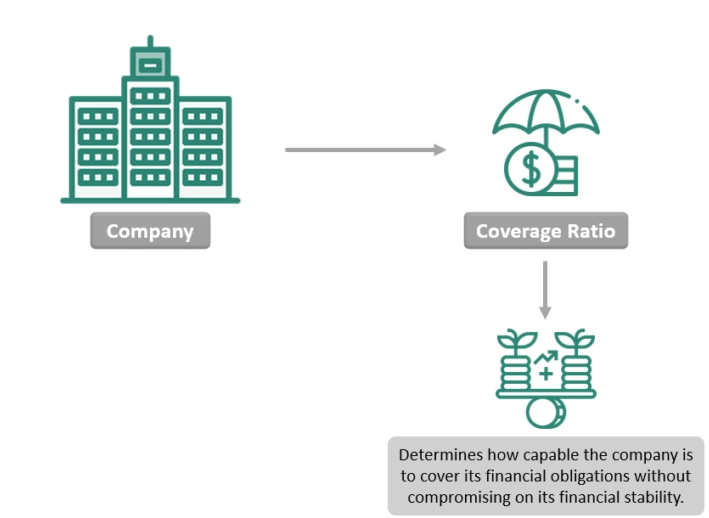
Therefore, never use the interest coverage ratio alone. It's one vital piece of a larger puzzle that includes the debt-to-equity ratio, free cash flow analysis, and a review of the debt maturity schedule.
So, what's the final takeaway? The interest coverage ratio isn't a pass/fail test. It's a diagnostic tool. A low or falling ratio doesn't automatically mean "sell" or "reject the loan." It means "dig here." It's the flashing check-engine light on your financial dashboard. The smart move isn't to ignore it or panic. It's to pop the hood, combine it with other metrics, and figure out exactly what's going on under the surface. That's how you avoid nasty surprises and make truly informed decisions.
Reader Comments