Let's be honest. A company's net income on the income statement is a bit like a politician's promise – often polished, sometimes misleading, and rarely telling you the full story about what's actually happening on the ground. That's where the free cash flow formula comes in. It's the financial metric that cuts through the accounting rules, non-cash charges, and creative adjustments to answer the single most important question for investors and business owners: Is this business generating real, spendable cash after covering the essential costs of keeping the lights on and growing?
I've seen too many "profitable" companies on paper run into a wall because they burned through their cash. The free cash flow calculation is your early warning system and your ultimate profitability test, rolled into one.
What You'll Learn Inside
- Why Free Cash Flow is Your Ultimate Financial Health Check
- Breaking Down the Free Cash Flow Formula Piece by Piece
- Your Step-by-Step Guide to Calculating FCF
- Putting It Into Practice: A Real-World Analysis
- The Subtle Mistakes Even Experienced Analysts Make
- Going Beyond the Basics: Advanced FCF Tactics
- Your Free Cash Flow Questions, Answered
Why Free Cash Flow is Your Ultimate Financial Health Check
Earnings can be manipulated. Revenue can be booked before cash is collected. But cash in the bank is unambiguous. Free cash flow (FCF) represents the cash a company has left over after it has paid all its operating expenses and made the necessary capital expenditures (CapEx) to maintain or expand its asset base.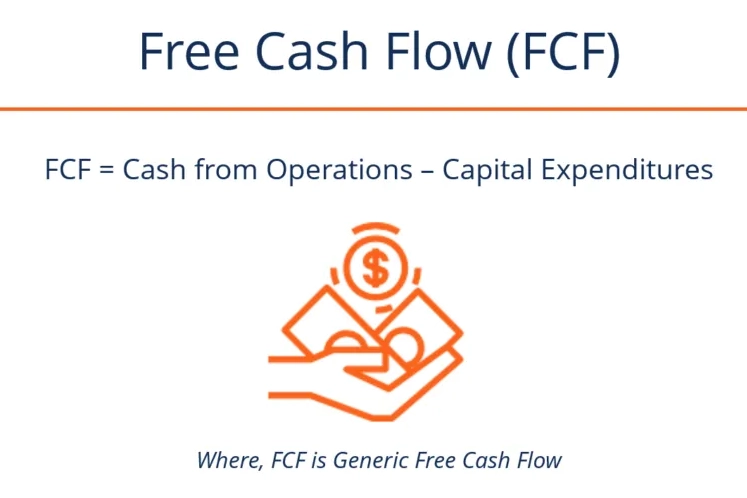
Think of it this way. Your salary is your operating cash flow. After paying your rent, groceries, and utilities (operating expenses), you have some money left. But before you can call it "free" to spend on a vacation or invest, you must first set aside money for fixing your leaking roof or buying a new car when the old one dies (capital expenditures). What's left is your personal free cash flow.
For a business, positive FCF means it has the financial flexibility to do valuable things without begging bankers or investors: pay dividends, buy back shares, pay down debt, or make strategic acquisitions. Negative FCF isn't always a death sentence – a fast-growing tech startup might burn cash to build market share – but it's a critical flag that demands an explanation.
Breaking Down the Free Cash Flow Formula Piece by Piece
The most common and practical free cash flow formula starts with operating cash flow from the cash flow statement. Forget trying to derive it purely from the income statement; you'll miss crucial working capital moves.
It looks simple, but the devil is in the details of those two components.
Operating Cash Flow (OCF): The Engine's Real Output
OCF is found on the statement of cash flows, which you can get from any company's annual report (10-K) or quarterly report (10-Q) filed with the SEC. It starts with net income and then adds back all non-cash expenses (like depreciation) and adjusts for changes in working capital (inventory, accounts receivable, accounts payable).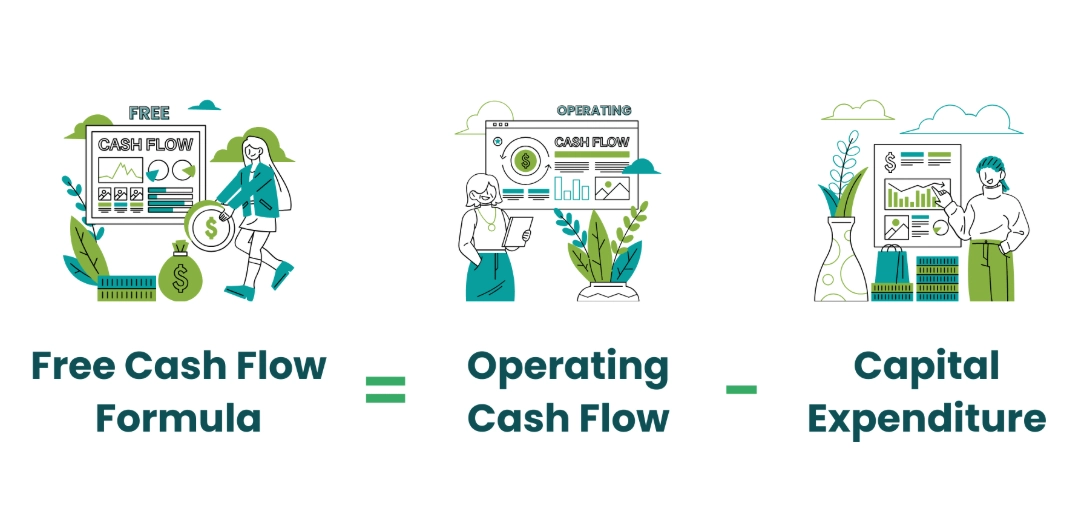
This adjustment for working capital is where many investors get tripped up. An increase in accounts receivable (money customers owe you) is a use of cash, even though it's recorded as revenue. Your product went out the door, but the cash didn't come in. OCF captures this reality.
Capital Expenditures (CapEx): The Price of Staying in the Game
CapEx is the money spent on buying, upgrading, or maintaining physical assets like property, plants, equipment, and technology. It's listed in the "Cash Flows from Investing Activities" section of the cash flow statement, usually as "Purchases of property, plant and equipment."
This is the critical subtraction. A factory needs new machines. A software company needs more servers. A retailer needs to refurbish stores. If you don't spend this money, the business decays. So FCF tells you what's left after this essential maintenance spend.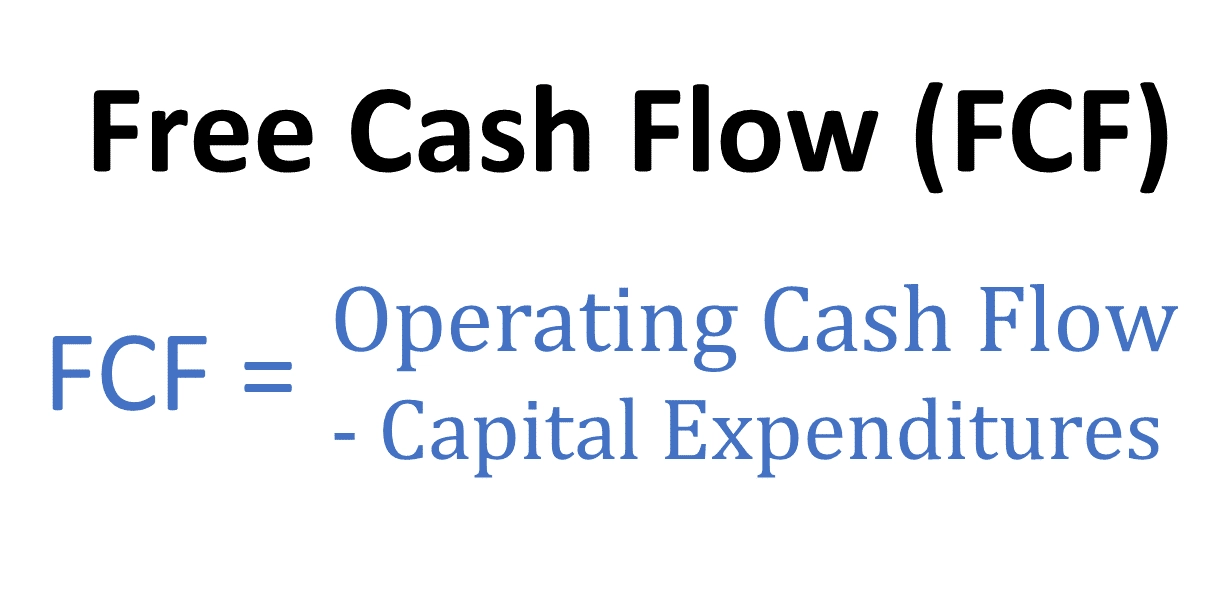
Your Step-by-Step Guide to Calculating FCF
Let's walk through it with a hypothetical company, "TechGrow Inc." We'll pull numbers from its financial statements.
- Find the Cash Flow Statement. Open TechGrow's latest 10-K. Go to the Consolidated Statements of Cash Flows.
- Locate Operating Cash Flow. It's clearly labeled. Let's say it's $250 million.
- Locate Capital Expenditures. Look in the "Investing Activities" section. Find "Purchases of property and equipment." Let's say it's $80 million.
- Do the Math. FCF = $250 million (OCF) - $80 million (CapEx) = $170 million.
That's it. TechGrow generated $170 million in free cash flow for that period. Now, the analysis begins. Is that number growing? How does it compare to net income? What are they doing with that cash?
Putting It Into Practice: A Real-World Analysis
Let's compare two fictional companies in the same industry to see how free cash flow analysis works.
| Metric (in $ millions) | Company A: "StableProd" | Company B: "GrowthBurn" |
|---|---|---|
| Net Income | 150 | 5 |
| Operating Cash Flow (OCF) | 180 | 40 |
| Capital Expenditures (CapEx) | 50 | 120 |
| Free Cash Flow (FCF) | 130 | -80 |
| FCF vs. Net Income | FCF > Net Income (Healthy) | FCF |
Look at Company A, StableProd. Its FCF ($130M) is strong and actually higher than its net income ($150M). This often happens when a company has large non-cash expenses (like depreciation) or is efficiently managing its working capital (collecting receivables faster, stretching payables). This is a sign of high-quality earnings. That $130M is cash in the bank to reward shareholders or reinvest.
Now, Company B, GrowthBurn. It's barely profitable on paper ($5M net income), but its cash situation is dire. It's burning $80 million in free cash flow. Why? Its massive CapEx ($120M) is far exceeding the cash its operations are generating ($40M OCF). This might be fine if it's building a revolutionary new factory that will pay off in three years. But as an investor, you need to ask: Is this burn rate sustainable? When will it turn FCF-positive? The free cash flow calculation forces you to ask these vital questions that the income statement glosses over.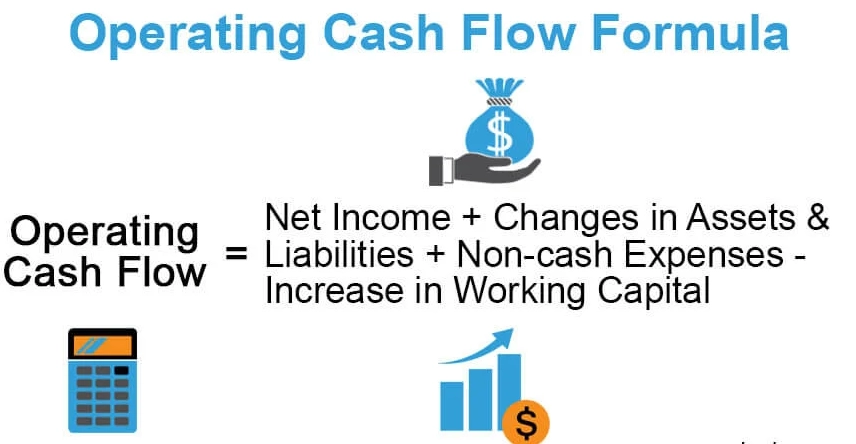
The Subtle Mistakes Even Experienced Analysts Make
After a decade of doing this, I see the same errors repeatedly.
Mistake 1: Ignoring Working Capital Volatility. They calculate FCF one quarter and think it's a permanent run-rate. But if a company stuffed its distribution channels with inventory (increasing inventory, a use of cash), it will depress OCF and FCF that quarter. The next quarter, when that inventory sells, OCF might pop. You need to look at FCF over a full year or longer to smooth out these bumps.
Mistake 2: Treating All CapEx the Same in Analysis. A company replacing ten-year-old trucks has very different FCF implications than one building a brand new R&D campus. The first is survival spending; the second is optional growth spending. While the formula subtracts both, your interpretation should differ. A low or negative FCF due to aggressive growth CapEx is far less concerning than one due to bloated maintenance costs.
Mistake 3: Forgetting About Stock-Based Compensation (SBC). SBC is a non-cash expense added back to net income when calculating OCF. So, a company with huge SBC can show deceptively strong OCF and FCF. But SBC is a real economic cost – it dilutes shareholders. When I analyze, I often look at FCF after adjusting for the cash the company would need to spend to buy back the shares issued for SBC. It's a more conservative view.
Going Beyond the Basics: Advanced FCF Tactics
Once you're comfortable with the basic free cash flow formula, you can layer in more sophisticated analysis.
Free Cash Flow to Equity (FCFE): This is the cash flow available to the company's common shareholders after all expenses, reinvestment, and debt repayments. Formula: FCFE = FCF - (Debt Repayments - New Debt Issued). It's crucial for dividend sustainability analysis.
Free Cash Flow Yield: This is FCF divided by the company's Enterprise Value (EV). It's like an earnings yield, but with cash. A high FCF Yield can signal an undervalued company. Formula: FCF Yield = (Free Cash Flow / Enterprise Value) * 100%.
The FCF Conversion Ratio: This measures how efficiently a company turns its accounting profits into cash. Formula: (Free Cash Flow / Net Income) * 100%. A ratio consistently above 100% is a hallmark of a fantastic business with minimal capital needs and strong pricing power (think software). A ratio below 50% warrants serious scrutiny.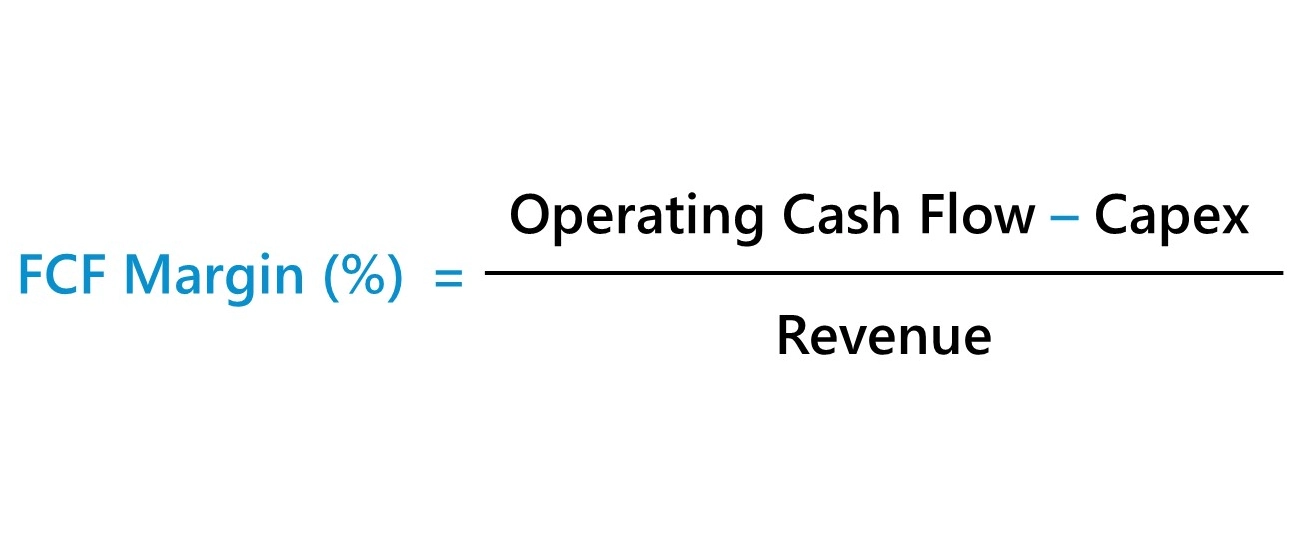
Your Free Cash Flow Questions, Answered
The free cash flow formula isn't just a calculation; it's a mindset. It shifts your focus from accounting profits to economic reality. By mastering it – understanding where the numbers come from, what they can hide, and how to interpret them over time – you equip yourself with one of the most powerful tools in investing and business management. You stop looking at the sticker price and start checking the engine.
Reader Comments