Let's cut through the noise. The profit margin formula isn't just accounting jargon—it's the vital sign of your business's financial health. I've seen too many entrepreneurs focus solely on top-line revenue, celebrating big sales numbers while their actual profitability quietly bleeds out. Understanding and correctly applying these formulas is what separates thriving businesses from those just surviving. It tells you not just if you're making money, but how efficiently you're making it. In this guide, we'll move beyond the basic textbook definition. We'll walk through the exact calculations, expose a common but costly mistake most beginners make, and lay out concrete steps you can take this quarter to improve your margins.
What You'll Learn Inside
What Exactly is a Profit Margin Formula?
At its core, a profit margin formula is a simple ratio. It takes a specific measure of profit (like gross profit or net profit) and divides it by your total revenue. The result is a percentage that shows how many cents of profit you make for every dollar of sales.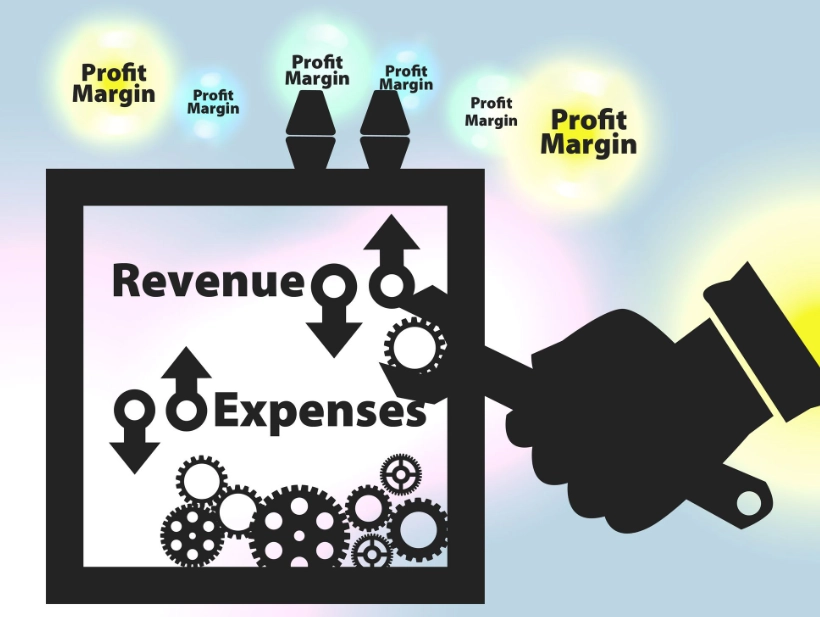
Why is this percentage so much more powerful than just looking at a dollar figure? Let's say your business made $50,000 in profit last year. That sounds good. But if that came from $1,000,000 in sales, your net profit margin is 5%. If your competitor made the same $50,000 profit from only $500,000 in sales, their margin is 10%. They're twice as efficient at converting sales into profit. That's the power of the margin—it levels the playing field and lets you compare efficiency regardless of size.
Here's the subtle error I see constantly: business owners fixate on just one margin, usually the gross profit margin. They think, "My product costs are low, so I'm good." But they ignore operating expenses creeping up. A healthy gross margin with a terrible net margin is a red flag waving furiously. You need to track all three key margins to get the full picture.
How to Calculate the Three Main Profit Margins
There isn't just one "profit margin." There are three primary ones, each serving a different diagnostic purpose. Think of them as a medical check-up: gross profit is your basic vitality, operating profit checks your core organ function, and net profit is your overall health after everything.
Here’s a quick reference table for the formulas we’re about to dive into:
| Margin Type | Formula | What It Measures | "Brew & Bean" Example (Annual) |
|---|---|---|---|
| Gross Profit Margin | (Revenue - COGS) / Revenue | Profitability after direct production costs. | ($200,000 - $80,000) / $200,000 = 60% |
| Operating Profit Margin | Operating Profit / Revenue | Profitability from core operations before financing/taxes. | $50,000 / $200,000 = 25% |
| Net Profit Margin | Net Profit / Revenue | The final, bottom-line profitability. | $35,000 / $200,000 = 17.5% |
1. Gross Profit Margin Formula
This is your starting point. The gross profit margin formula tells you how much money you have left to cover all your other expenses after paying for the direct costs of making your product or delivering your service.
Formula: Gross Profit Margin = (Revenue - Cost of Goods Sold (COGS)) / Revenue
COGS Deep Dive: This is where people mess up. For "Brew & Bean," COGS includes:
- Coffee beans, milk, syrups, cups, lids.
- The wholesale cost of pastries sold.
- It does NOT include: the barista's salary (that's an operating expense), the rent, or the electricity for the espresso machine. Those are indirect costs.
If Brew & Bean had $200,000 in annual sales and spent $80,000 on coffee, milk, pastries, and cups, the calculation is:
Gross Profit = $200,000 - $80,000 = $120,000.
Gross Profit Margin = $120,000 / $200,000 = 0.60 or 60%.
This means for every dollar from a latte, 40 cents covers the direct ingredients, and 60 cents is left to pay for everything else and hopefully make a profit. A low gross margin often means your product costs are too high or your prices are too low.
2. Operating Profit Margin Formula
Also called EBIT (Earnings Before Interest and Taxes) Margin. This is the reality check. It shows how profitable your core business operations are after covering both direct costs (COGS) and day-to-day operating expenses.
Formula: Operating Profit Margin = Operating Profit / Revenue
Where Operating Profit = Gross Profit - Operating Expenses
Operating Expenses (OpEx): These are the costs of running the business that aren't directly tied to a single product unit. For Brew & Bean:
- Rent and utilities.
- Salaries and wages for baristas and the manager.
- Marketing and advertising.
- Equipment maintenance and depreciation.
- Point-of-sale system fees.
Let's say Brew & Bean's operating expenses total $70,000.
Operating Profit = $120,000 (Gross Profit) - $70,000 (OpEx) = $50,000.
Operating Profit Margin = $50,000 / $200,000 = 0.25 or 25%.
This 25% margin is a strong indicator of operational efficiency. If this number is shrinking over time while sales are steady, it's a clear signal that your operating costs are bloating and need control.
3. Net Profit Margin Formula
The bottom line. The net profit margin formula shows what percentage of your revenue is actual profit after all expenses, including interest on loans and taxes, have been paid. This is the money that can be reinvested or taken as owner earnings.
Formula: Net Profit Margin = Net Profit / Revenue
Back to our cafe. Let's assume they have a small business loan with $5,000 annual interest and owe $10,000 in taxes.
Net Profit = $50,000 (Operating Profit) - $5,000 (Interest) - $10,000 (Taxes) = $35,000.
Net Profit Margin = $35,000 / $200,000 = 0.175 or 17.5%.
This is your ultimate scorecard. A 17.5% net margin is generally considered very healthy for a small business. According to data often referenced by sources like the U.S. Small Business Administration (SBA), average net profit margins vary widely by industry, but many small service businesses aim for 10-20%.
How to Interpret and Use Your Profit Margin
Calculating the numbers is step one. Knowing what to do with them is where the real business wisdom kicks in.
Benchmarking: Don't evaluate your margins in a vacuum. Compare them to industry averages. A 10% net margin might be terrible for a software company but fantastic for a grocery store. Industry data can be found in reports from IBISWorld, industry associations, or even SEC filings of public competitors.
Trend Analysis: This is more important than a single snapshot. Are your margins improving, holding steady, or declining each quarter? A declining gross margin might mean supplier costs are rising and you haven't adjusted prices. A declining operating margin signals runaway overhead. Plot these numbers on a simple graph.
Product/Service Line Analysis: Apply the gross profit margin formula to individual products. At Brew & Bean, calculate the margin for just lattes, just drip coffee, just pastries. You might find pastries have a 70% margin while a complicated seasonal drink has only a 40% margin after expensive syrups and labor time. This informs menu pricing and promotion decisions.
Actionable Strategies to Improve Your Margin
Seeing a margin you don't like? Here are levers you can pull, moving from quick wins to strategic shifts.
To Improve Gross Margin:
- Renegotiate with Suppliers: Can you get a better price on coffee beans by committing to a larger annual order?
- Review Pricing: Have costs risen 15% but you've only raised prices 5% in three years? A small, justified price increase can have a massive impact on margin.
- Reduce Waste: Track milk spoilage or pastry waste at the cafe. Even a 2% reduction in waste flows straight to gross profit.
To Improve Operating Margin:
- Audit Subscriptions & Software: That project management tool you barely use? The premium website theme? Cancel them.
- Optimize Labor Scheduling: Use sales data to schedule baristas more precisely, avoiding overstaffing during slow hours. Labor is often the largest OpEx.
- Energy Efficiency: Switching to LED lights or an energy-efficient espresso machine lowers utility bills, a direct boost to operating profit.
To Improve Net Margin:
- Refinance Debt: Shop around for a lower interest rate on any business loans. Lower interest expense lifts net profit directly.
- Tax Strategy: Work with an accountant to ensure you're claiming all legitimate deductions and depreciation. This isn't about evasion; it's about smart planning.
The key is to start with one lever. Pick the margin that's weakest and implement one change this month. Track the result next quarter.
Reader Comments