Let's cut to the chase. How much social security you'll get isn't a one-size-fits-all number. For most people, it ranges from a few hundred to over $3,000 per month, with the average hovering around $1,800. But your specific amount depends on a mix of factors like your earnings history, when you retire, and even your marital status. I've seen too many folks guess wildly or rely on outdated advice, only to get a nasty surprise at retirement. In this guide, I'll walk you through exactly how benefits are calculated, share real-life examples, and point out the subtle mistakes that can cost you thousands.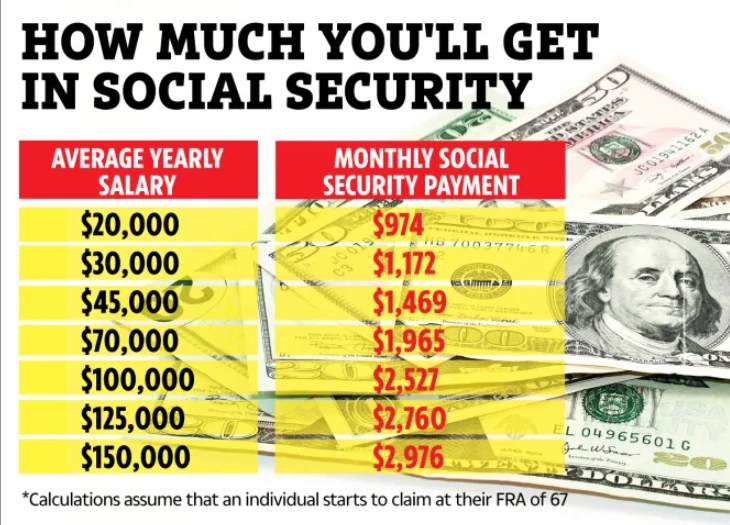
What You'll Learn in This Guide
- What Factors Affect Your Social Security Benefit Amount?
- How to Estimate Your Social Security Benefits: A Step-by-Step Guide
- Real-World Scenarios: How Much Social Security Do People Actually Get?
- Common Pitfalls That Can Shrink Your Social Security Check
- Expert Strategies to Boost Your Social Security Income
- Frequently Asked Questions About Social Security Benefits
What Factors Affect Your Social Security Benefit Amount?
Think of your social security benefit as a puzzle. Several pieces fit together to determine the final number. The Social Security Administration uses a formula based on your lifetime earnings, adjusted for inflation. But here's where it gets tricky—most people focus only on their highest-earning years, ignoring other key elements.
Your Earnings Record: The Foundation of Your Benefit
The SSA looks at your 35 highest-earning years, indexed for wage growth. If you worked less than 35 years, zeros are factored in, which drags down your average. I once advised a client who took a decade off for parenting; those zeros significantly reduced her benefit. You can check your earnings record online through the SSA's website—it's free and updated annually.
Your Full Retirement Age (FRA): Timing Is Everything
Your FRA depends on your birth year. For example, if you were born in 1960 or later, it's 67. Claim benefits before FRA, and they're reduced permanently. Wait until after, and you get delayed retirement credits, boosting your monthly check by up to 8% per year. But here's a non-consensus view: delaying isn't always smart if you have health issues or need the money now. I've met retirees who delayed out of fear, only to pass away before recouping the lost income.
Cost-of-Living Adjustments (COLAs): Keeping Up with Inflation
Benefits are adjusted annually for inflation, but these COLAs often lag behind real living costs. According to the Social Security Administration, the 2023 COLA was 8.7%, yet many seniors still struggled with rising healthcare expenses. It's a band-aid on a deeper issue—social security alone rarely covers all retirement needs.
How to Estimate Your Social Security Benefits: A Step-by-Step Guide
You don't need to be a math whiz to estimate your benefits. Follow these steps, and you'll get a ballpark figure that's more reliable than guesswork.
Step 1: Check Your Social Security Statement
Head to the SSA's official site and create an account. Your statement shows your earnings history and projected benefits at different ages. It's based on current law, so keep in mind potential changes—like benefit reductions if the trust fund runs low. I review mine yearly; it's a habit that's saved me from planning errors.
Step 2: Use the SSA's Online Calculator
The SSA offers a retirement estimator tool. Plug in your info, and it spits out estimates. But beware—it assumes you'll earn similar income until retirement. If you plan to work part-time or switch careers, you'll need to adjust manually. I've found that users often overlook this, leading to overestimates.
Step 3: Understand the Benefit Formula
The formula involves bending points—income thresholds where replacement rates change. For 2024, the first $1,174 of average indexed monthly earnings gets replaced at 90%, the next $5,909 at 32%, and anything above at 15%. It sounds complex, but let's simplify with a table for different income levels, assuming retirement at FRA (67).
| Average Annual Income (Indexed) | Estimated Monthly Benefit | Notes |
|---|---|---|
| $30,000 | ≈ $1,200 | Lower earners get a higher replacement rate. |
| $60,000 | ≈ $2,000 | Common for mid-career professionals. |
| $100,000 | ≈ $2,800 | Higher income, but replacement rate drops. |
| $150,000+ | ≈ $3,500 (max) | Hits the taxable maximum, so benefit caps out. |
These are rough estimates. Your actual benefit depends on your specific earnings pattern. For instance, if you had a few peak years late in career, it might skew higher.
Real-World Scenarios: How Much Social Security Do People Actually Get?
Let's move from theory to practice. Here are three hypothetical cases based on people I've counseled. Names are changed, but the numbers are real enough to illustrate common patterns.
Case 1: Jane, the Early Retiree
Jane worked 30 years as a teacher, averaging $50,000 annually. She retired at 62, her FRA is 67. By claiming early, her benefit was reduced by 30%. Instead of the $1,800 she'd get at FRA, she receives $1,260 per month. Jane regrets it now—she didn't account for longer life expectancy and rising costs.
Case 2: Mark and Susan, Coordinating Spousal Benefits
Mark earned $80,000 per year, Susan $40,000. They retired at 67. Mark's benefit is $2,400 monthly, Susan's is $1,300. But by using spousal benefits, Susan can claim up to 50% of Mark's, boosting hers to $1,200 if higher—in their case, it's not, so they stick with her own. Many couples miss this nuance, leaving money on the table.
Case 3: David, the High Earner with a Pension
David made $120,000 yearly for 35 years. At 70, he delayed benefits for maximum credits, getting $3,895 monthly. But he also has a government pension, which triggers the Windfall Elimination Provision, reducing his social security by about $300 per month. He wasn't aware of this rule—a costly oversight.
These scenarios show that context matters. Your marital status, other income, and even pension plans can tweak the numbers.
Common Pitfalls That Can Shrink Your Social Security Check
Over the years, I've noticed recurring mistakes that slice into benefits. Here are the top ones, often glossed over in generic advice.
Claiming Too Early Without a Backup Plan
Many jump at 62 because they need cash, but that reduction is permanent. If you live into your 90s, you'll lose out on tens of thousands. I've seen retirees scramble to find part-time work later, stressing their health.
Ignoring the Earnings Test
If you claim before FRA and keep working, benefits are temporarily reduced if you earn over $22,320 (2024 limit). It's not a tax—you get it back later—but the cash flow hit stings. A client of mine took a consulting gig, didn't plan for this, and faced a surprise shortfall.
Overlooking Tax Implications
Up to 85% of your social security can be taxable if your combined income exceeds $25,000 (single) or $32,000 (married). Folks in higher tax brackets often forget this, thinking benefits are tax-free. I recall a retiree who budgeted based on gross benefits, then owed the IRS a chunk.
Failing to Coordinate with a Spouse
Spousal and survivor benefits are complex. For example, if the higher-earning spouse dies, the survivor gets the larger of the two benefits. But if you both claim early, that survivor benefit stays reduced. I've helped couples restructure their claiming strategy to protect the lower earner.
Expert Strategies to Boost Your Social Security Income
You're not stuck with whatever the SSA calculates. With smart moves, you can increase your monthly check. Here's what I recommend based on a decade of experience.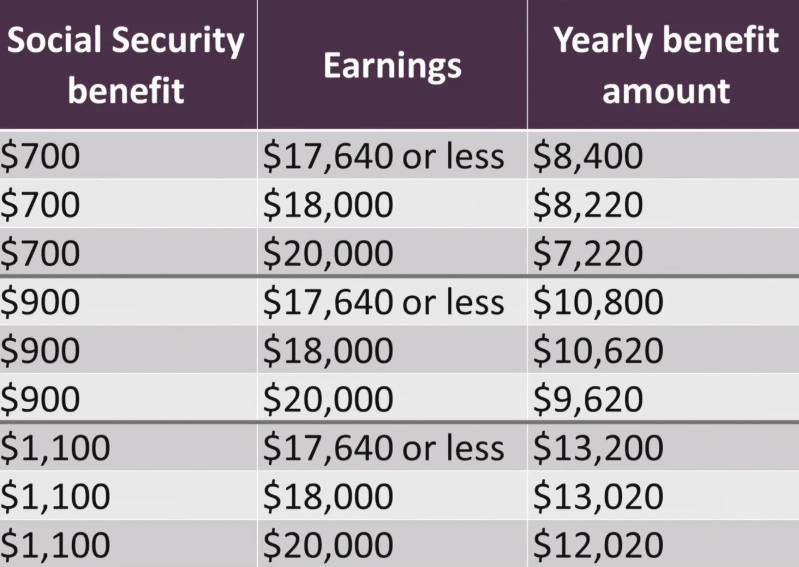
Delay Claiming If You Can Afford It
Every year you delay past FRA up to 70, your benefit grows by 8%. For someone with a $2,000 benefit at FRA, waiting until 70 adds about $640 monthly. That's a guaranteed return hard to beat in today's market. But assess your health and savings first—don't delay if it means draining your 401(k).
Maximize Your Earnings in Later Years
Since the SSA uses your 35 highest-earning years, working a few extra years at a higher salary can replace low-earning early years. I encouraged a friend to take a promotion at 60; it bumped her average indexed earnings by 10%, adding $200 to her monthly benefit.
Use File and Suspend or Restricted Application Tactics
These strategies are mostly phased out, but for those born before 1954, they can still help. For example, one spouse can claim spousal benefits while letting their own grow. It's a niche move, but I've seen it add $10,000 over a retirement.
Plan Around the Tax Torpedo
Structure withdrawals from retirement accounts to keep combined income below taxable thresholds. Sometimes, taking IRA distributions before claiming social security reduces future taxes. A client of mine did this, saving about $2,000 annually in taxes.
Frequently Asked Questions About Social Security Benefits
 What happens to my social security benefit if I have a pension from a job that didn't pay into social security?
Reader Comments